Hello,
I am trying to identify a very unusual antique metal mesh coin purse with a rare locking mechanism.
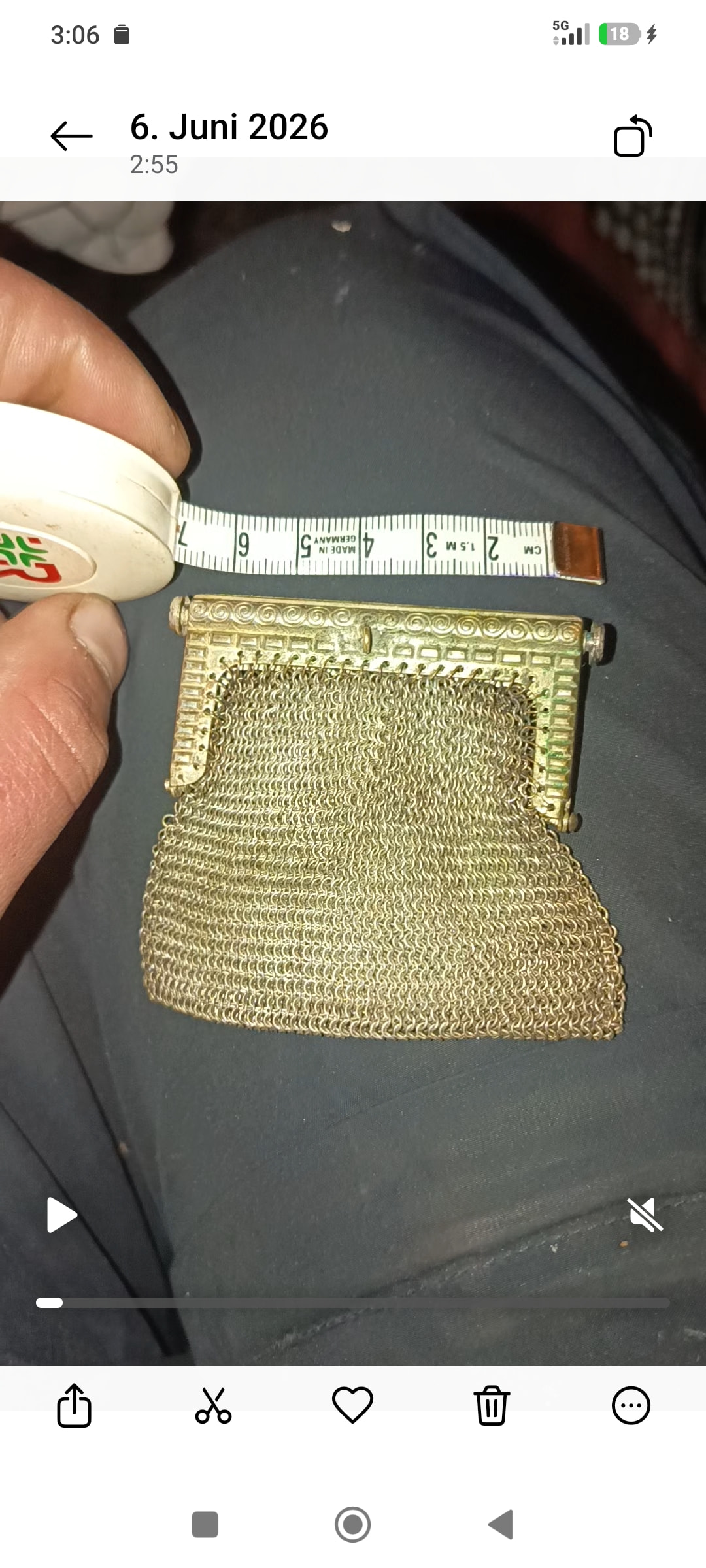
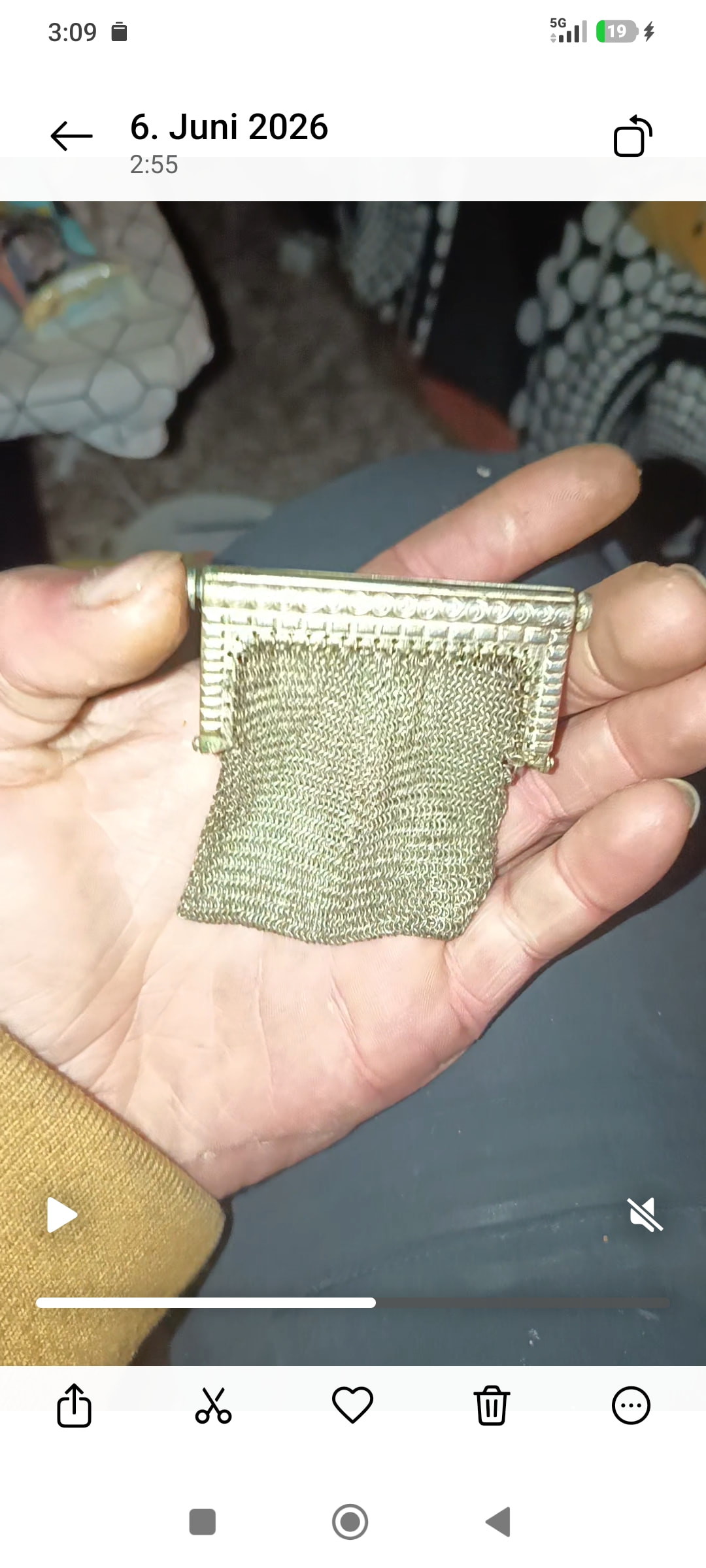
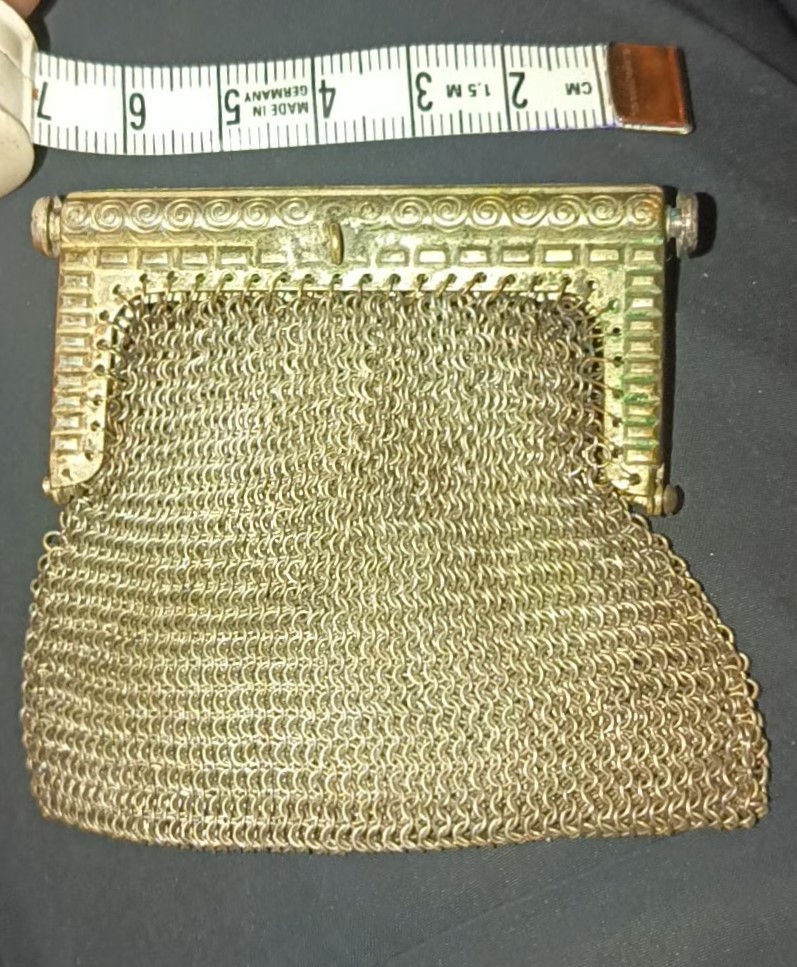
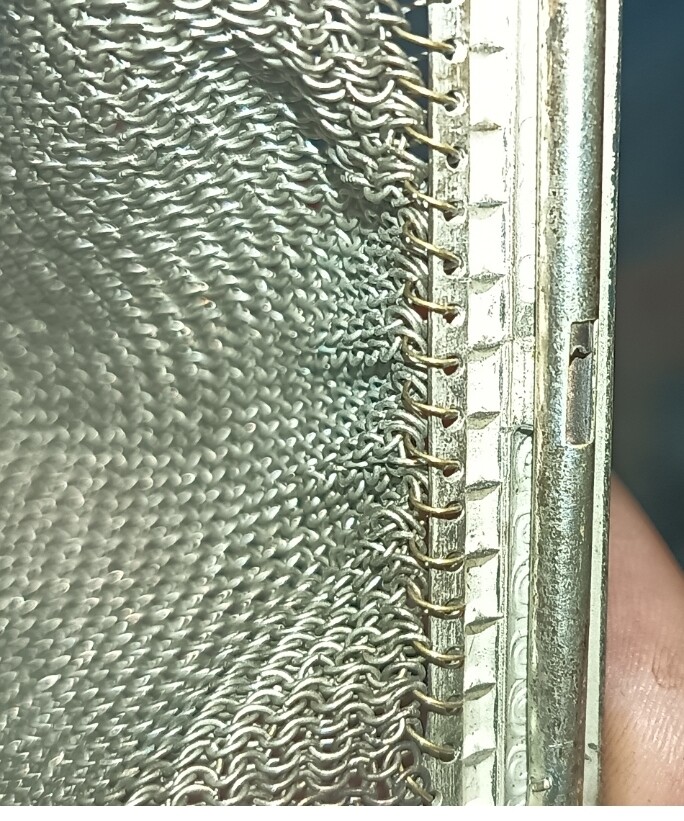
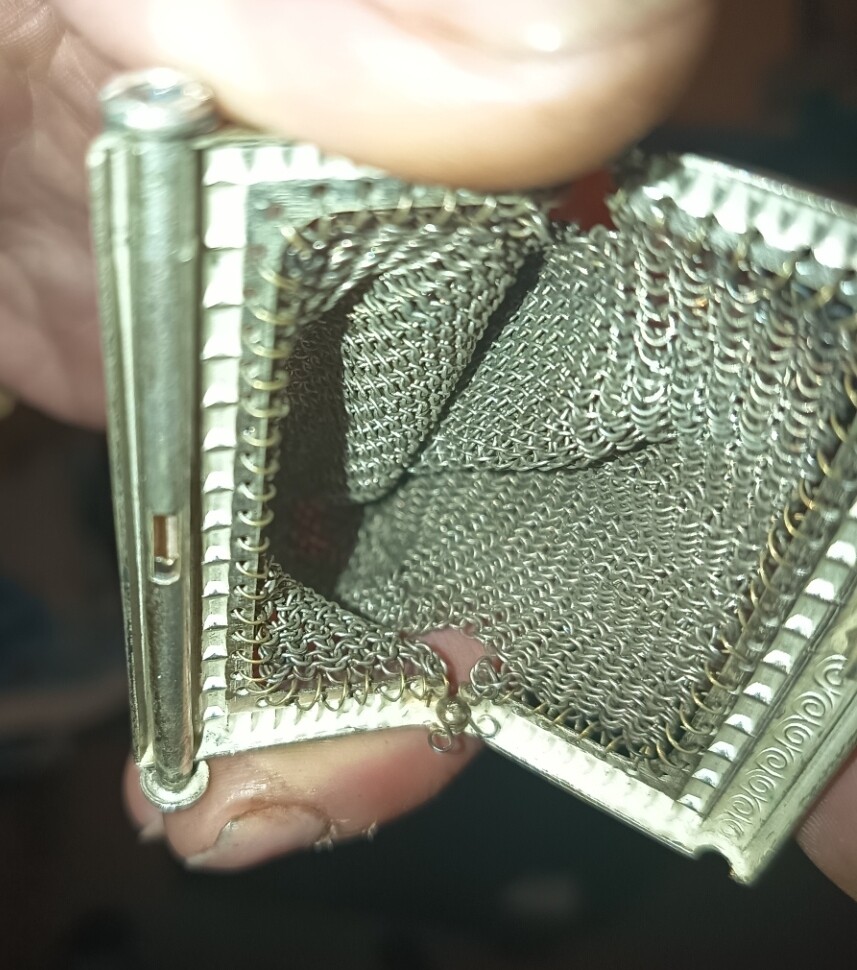
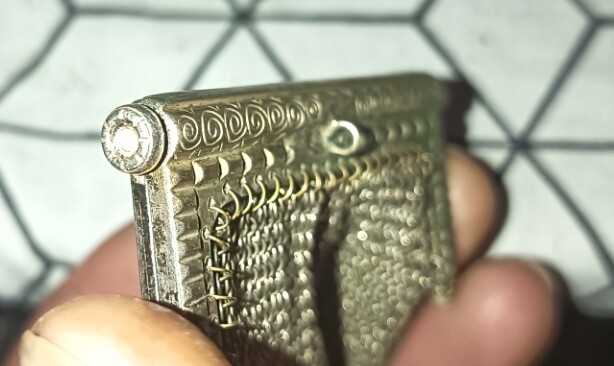
The purse measures approximately 5 cm wide and features an engraved rectangular frame with spiral decoration. Unlike ordinary mesh purses, it does not use a standard kiss-lock clasp.
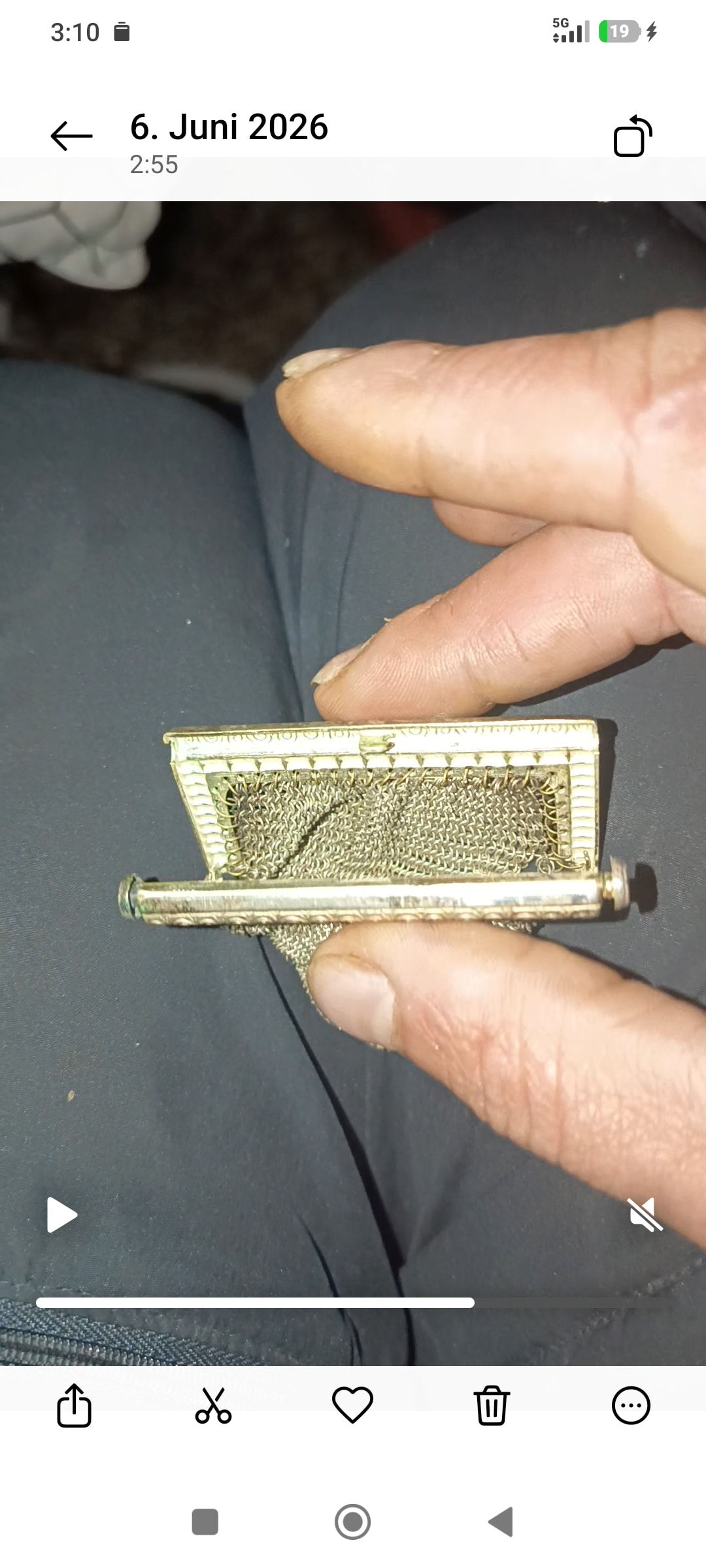
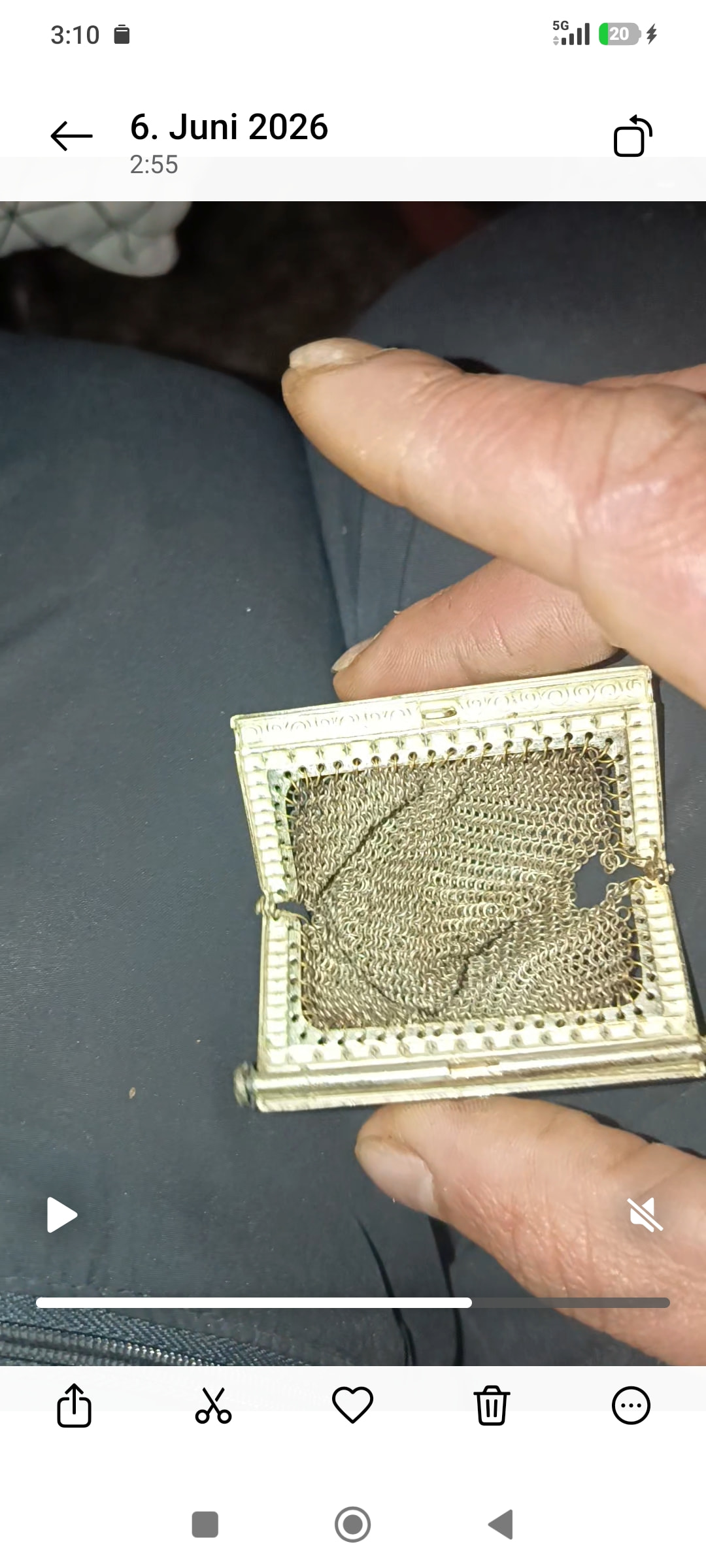
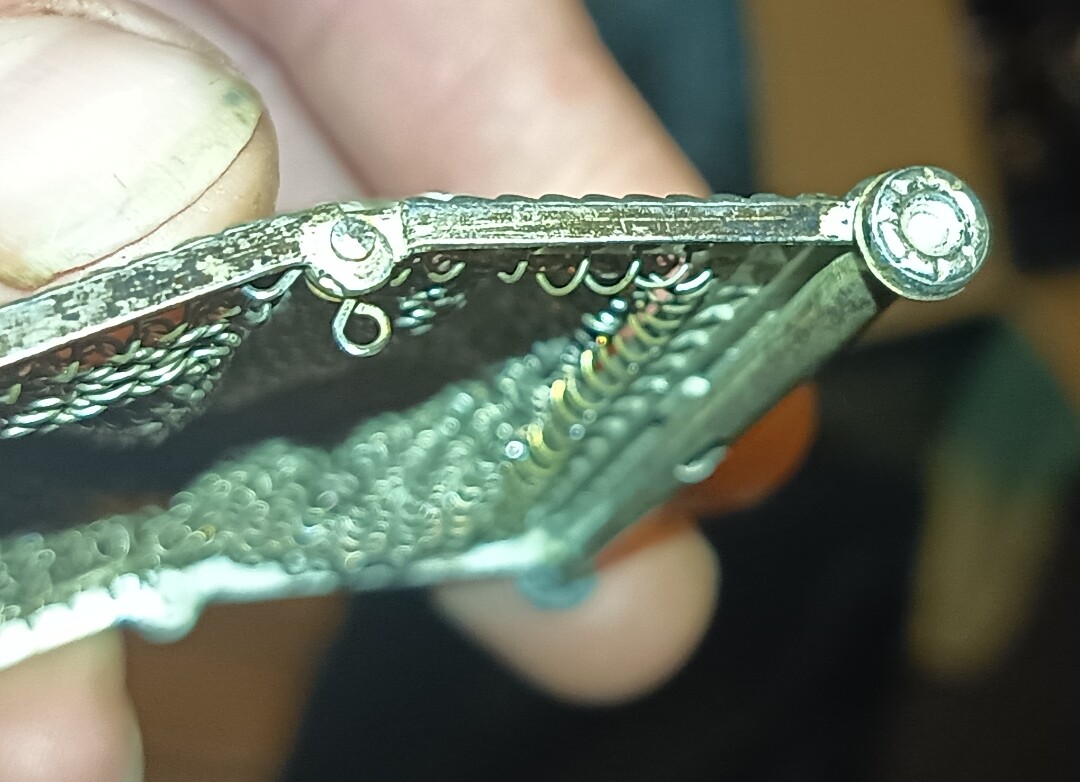
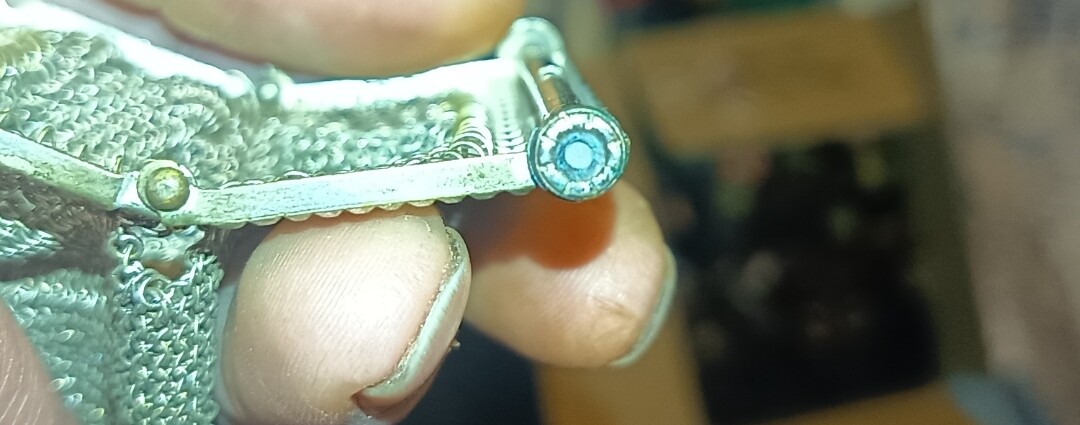
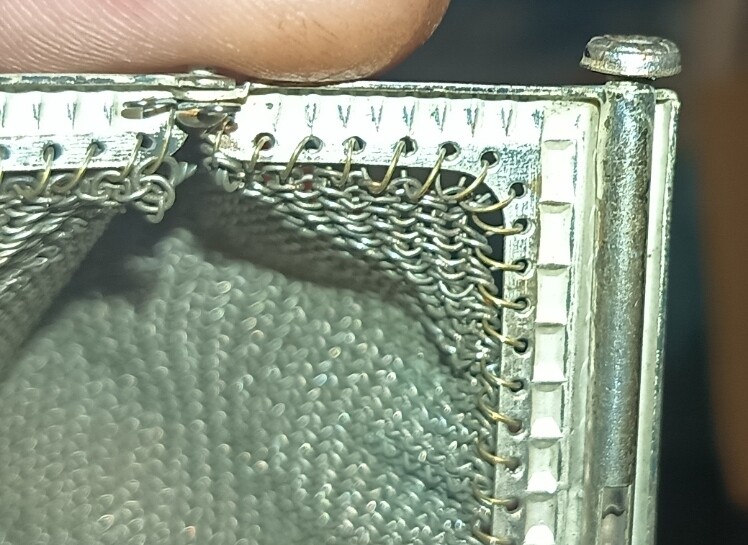
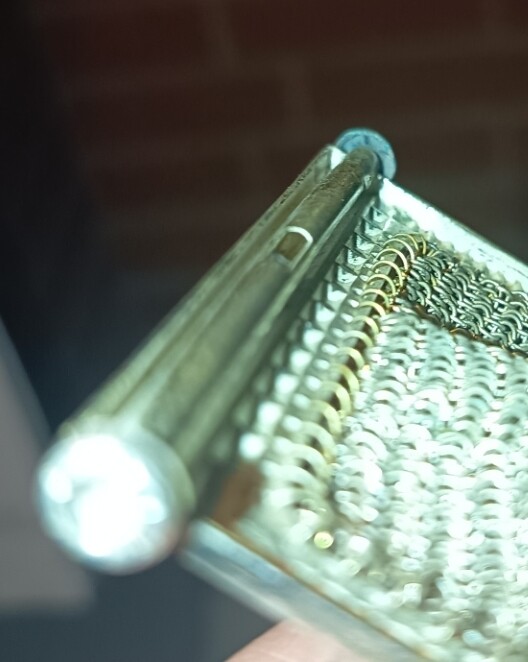
Instead, it appears to have an internal tubular spring-loaded locking mechanism. The lower round tube contains the locking system, and there is only a very small rectangular opening visible on the front together with a side-mounted release button. The purse locks automatically and can only be opened by activating the hidden release mechanism.
Despite extensive research, I have been unable to locate another example with the same construction or identify the manufacturer or any related patent.
I would greatly appreciate any information regarding:
• Manufacturer or maker
• Patent or registered design
• Approximate production date
• Rarity of this locking mechanism
• Comparable surviving examples in collections or museums
I have attached detailed photographs of the frame, mechanism and overall construction.
Thank you very much for your expertise and assistance.


1 Like

Please help me to identify this mysterious object. Science almost one month I am searching for a logical explanation! I never saw something tricky like that before!
Any hallmarks, markings, symbols, inscriptions?
Don’t take photos handheld. Place the item on a flat surface and take several sharp photos.
An antique French purse-handbag from the turn of the 19th and 20th centuries, made of fine silver or silver-plated chainmail. It features an ornate metal twist or ball clasp, often with floral or geometric motifs. This item was a popular evening accessory in the Victorian and Art Nouveau eras, also known as a “chatelaine purse.”
https://www.etsy.com/pl/listing/1130552206/torebka-wieczorowa-z-siatki-kolczastej-z?lang_mismatch=1
https://m.freeship.co.kr/mobile/content.asp?guid=2972369&sitecate=handmade
1 Like
Thank you very much for your quick reply and your helpful suggestions.
I really appreciate your expertise.
So far, I have not found any obvious hallmarks or inscriptions, but I will carefully inspect the frame again under magnification and provide close-up photos of every side.
Following your advice, I will also place the purse on a flat surface and take several sharp, high-resolution pictures instead of handheld photos.
During my own research, I found very similar German mesh purses dating from around the 1920s, including examples being offered internationally. However, I have not yet found another example with exactly the same opening mechanism, which makes me wonder whether it could be a less common variant or perhaps a patented design.
Thank you again for taking the time to help. I will upload better photographs as soon as possible and would be very interested in any further thoughts regarding the origin, maker or mechanism
2 Likes
Thank you very much for your quick response and your helpful advice.
As requested, I have now taken a complete new series of photographs on a flat surface and from many different angles. I will upload the original images one by one in full resolution so that any small hallmarks, inscriptions or construction details can be examined more easily.
I have carefully inspected the purse but have not yet been able to find any obvious maker’s mark or silver hallmark. If you notice anything in the photos that I may have overlooked, I would be very grateful for your opinion.
During my own research I also found a very similar German mesh purse from around the 1920s being offered internationally, but I have still not found another example with the same opening mechanism.
Thank you again for your time and expertise. I really appreciate your help.
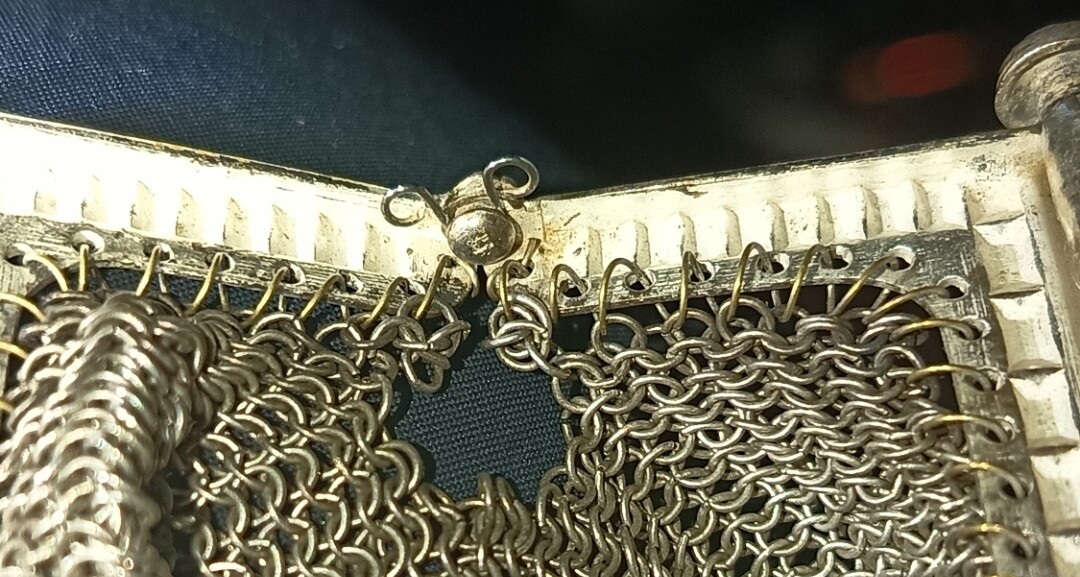
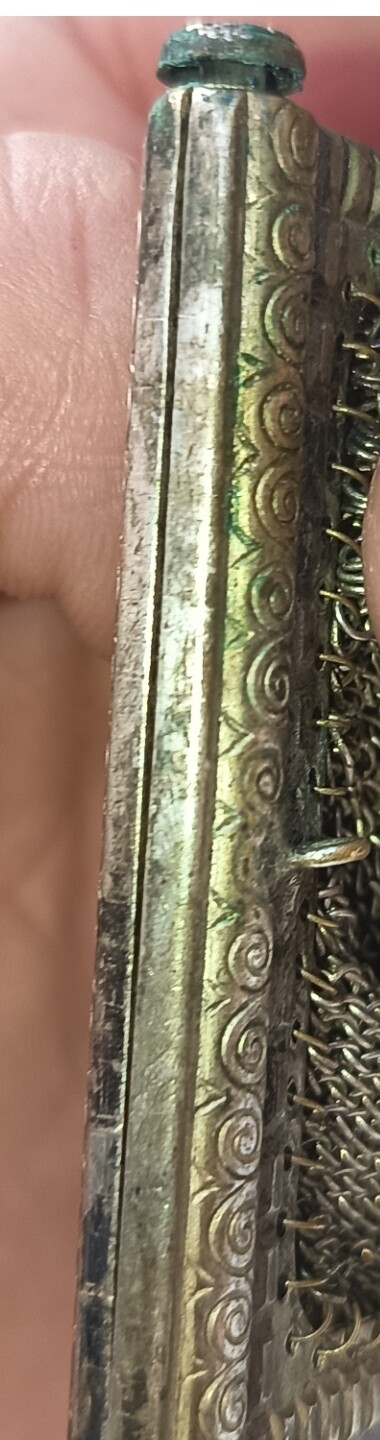
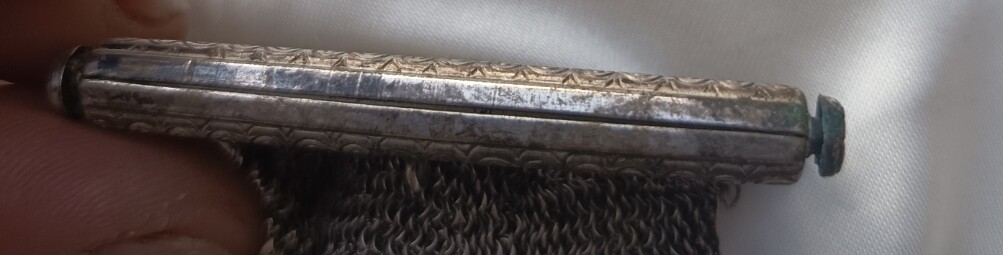
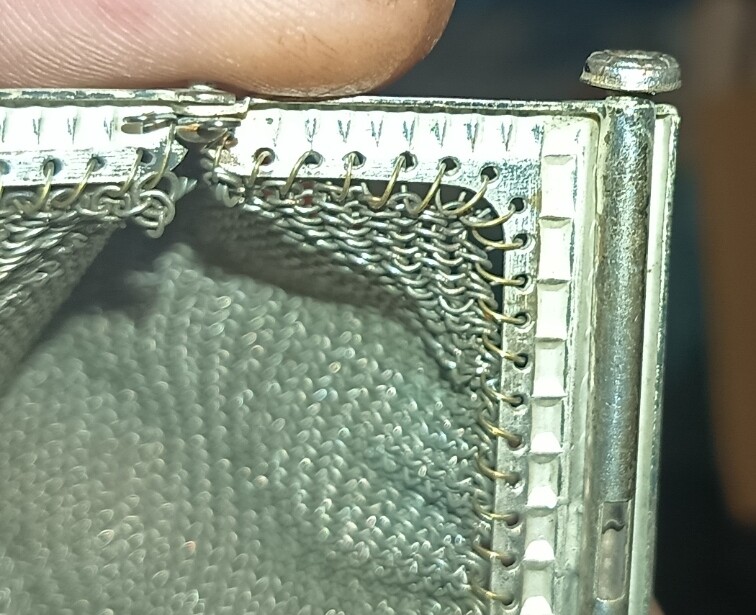
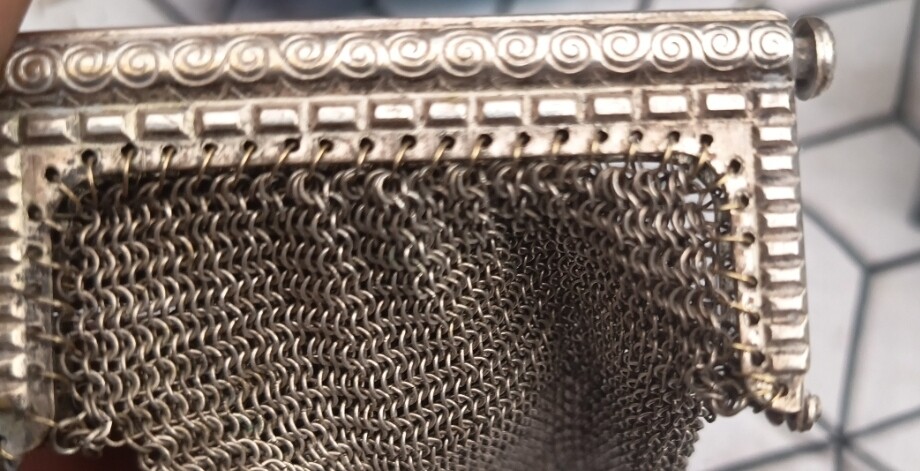
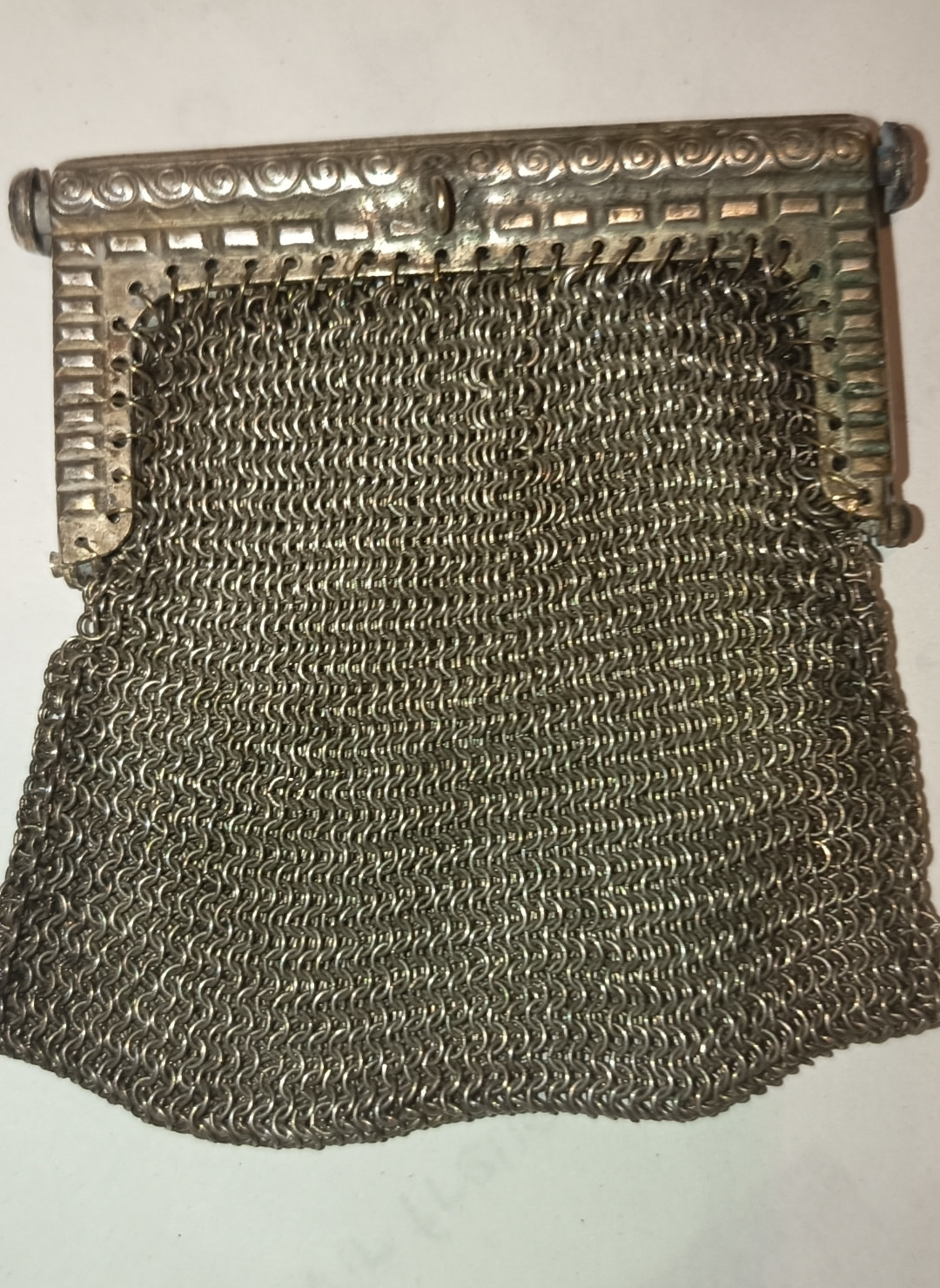
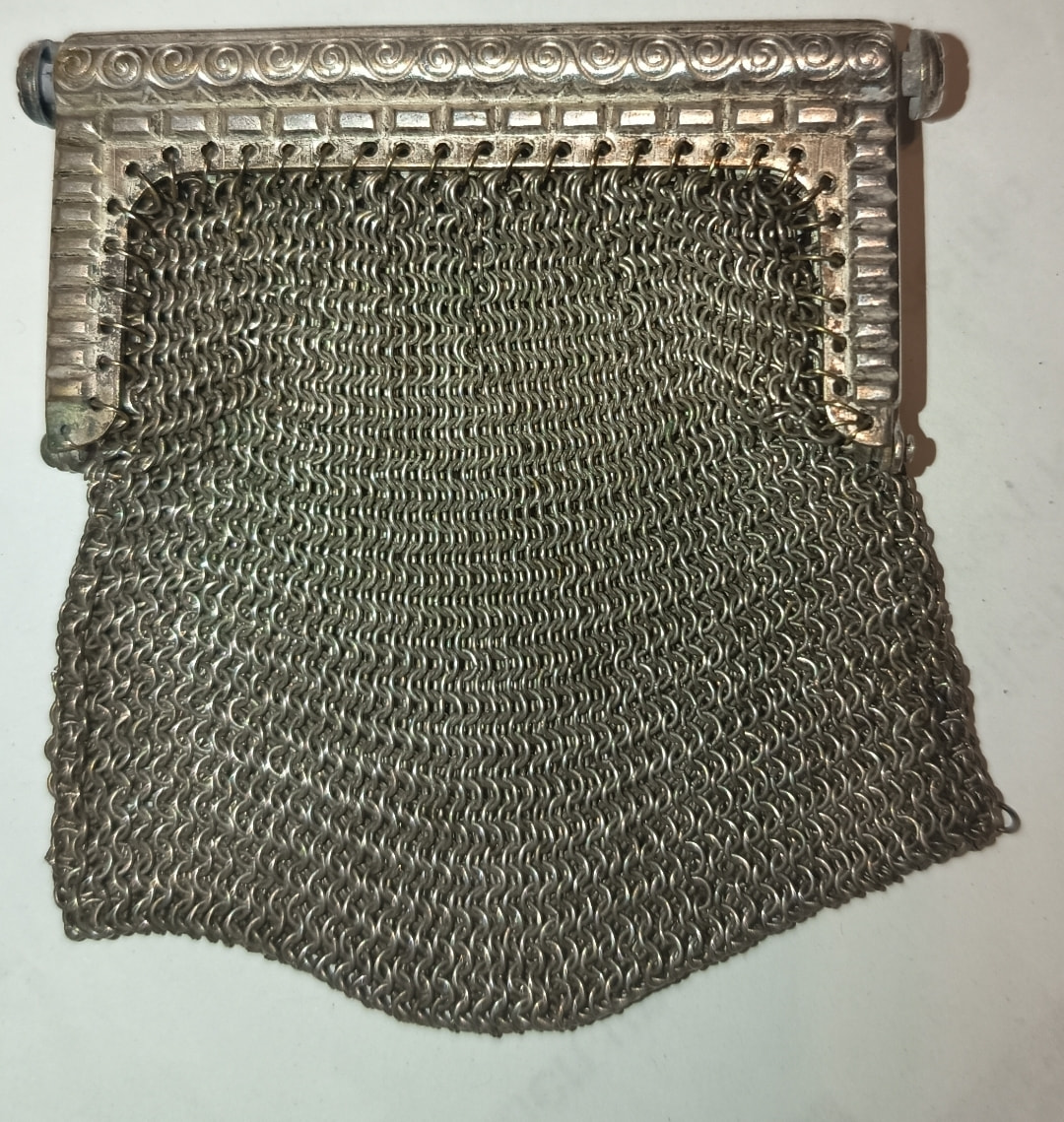
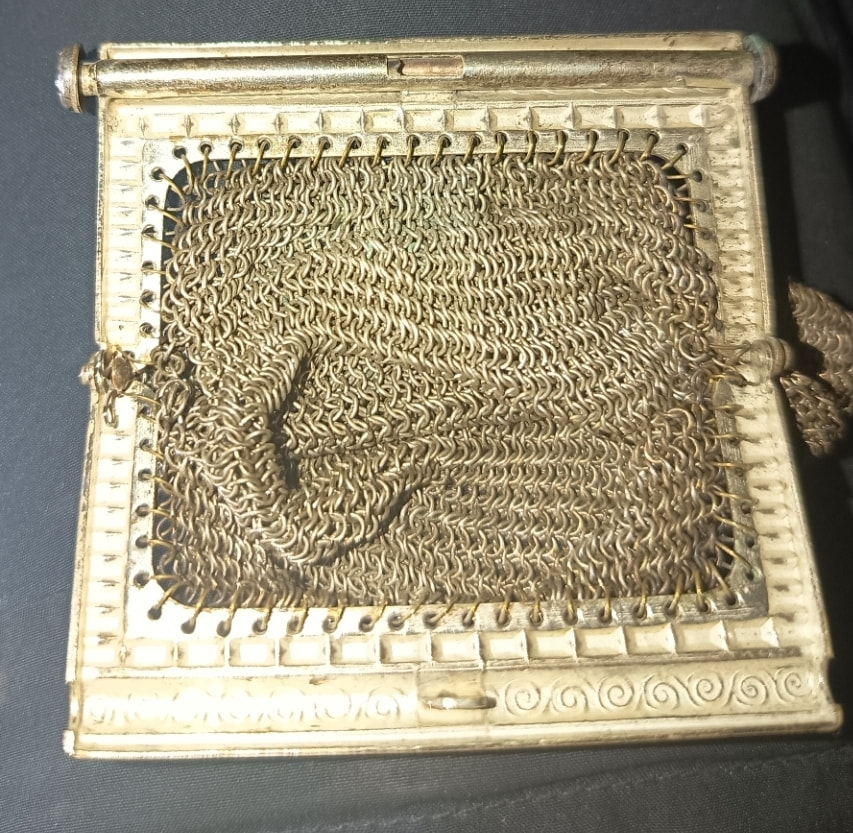
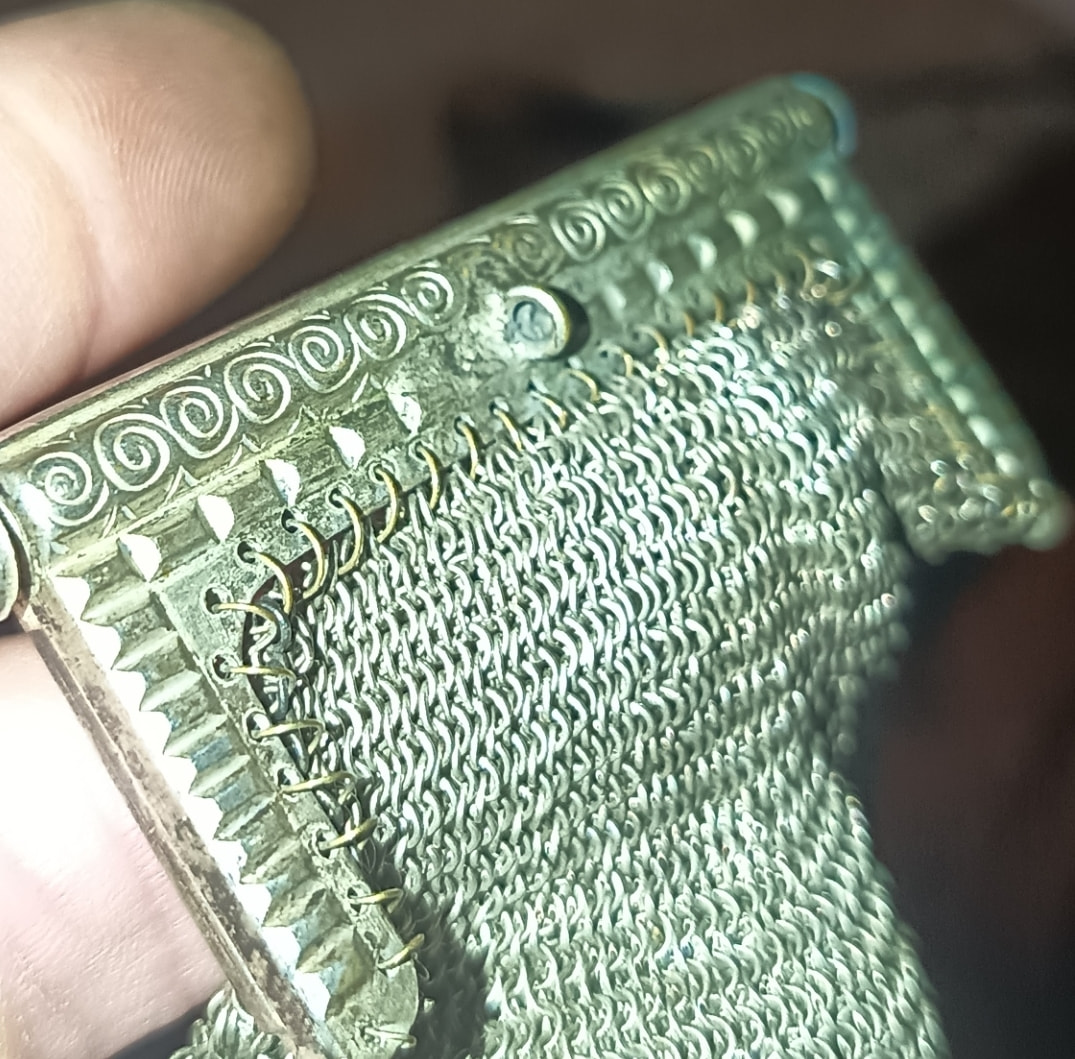
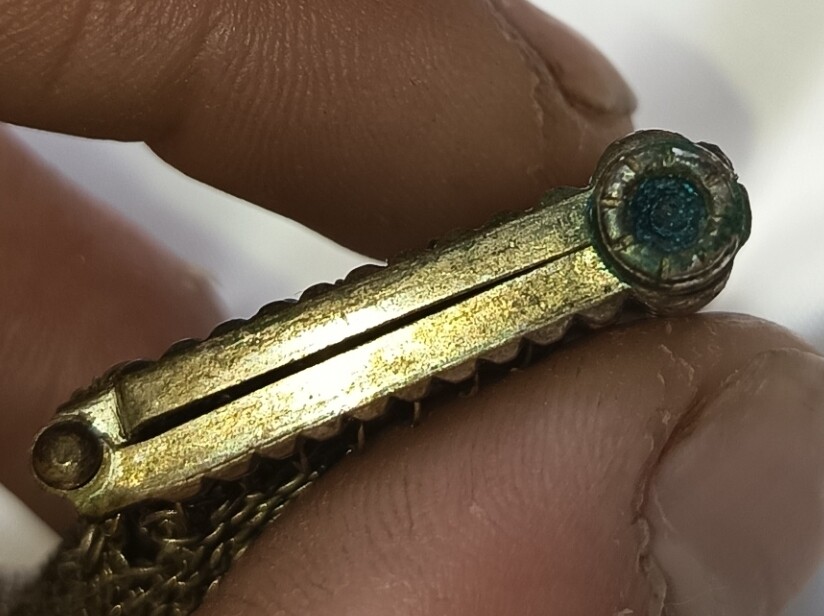
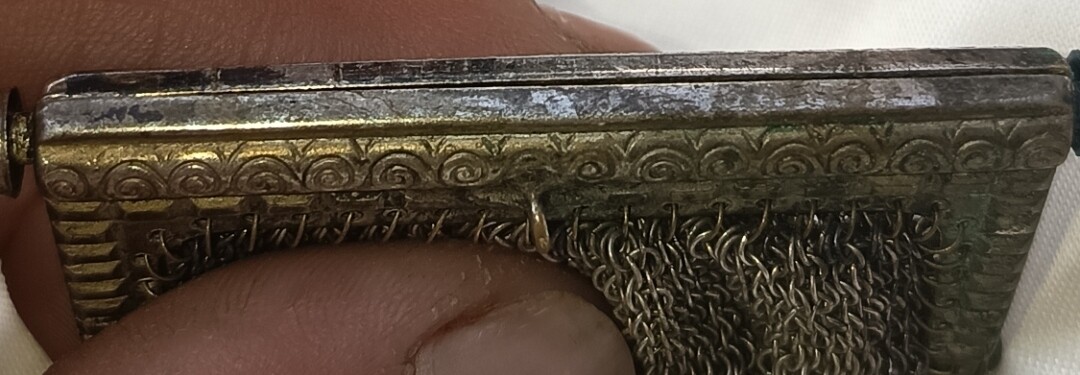
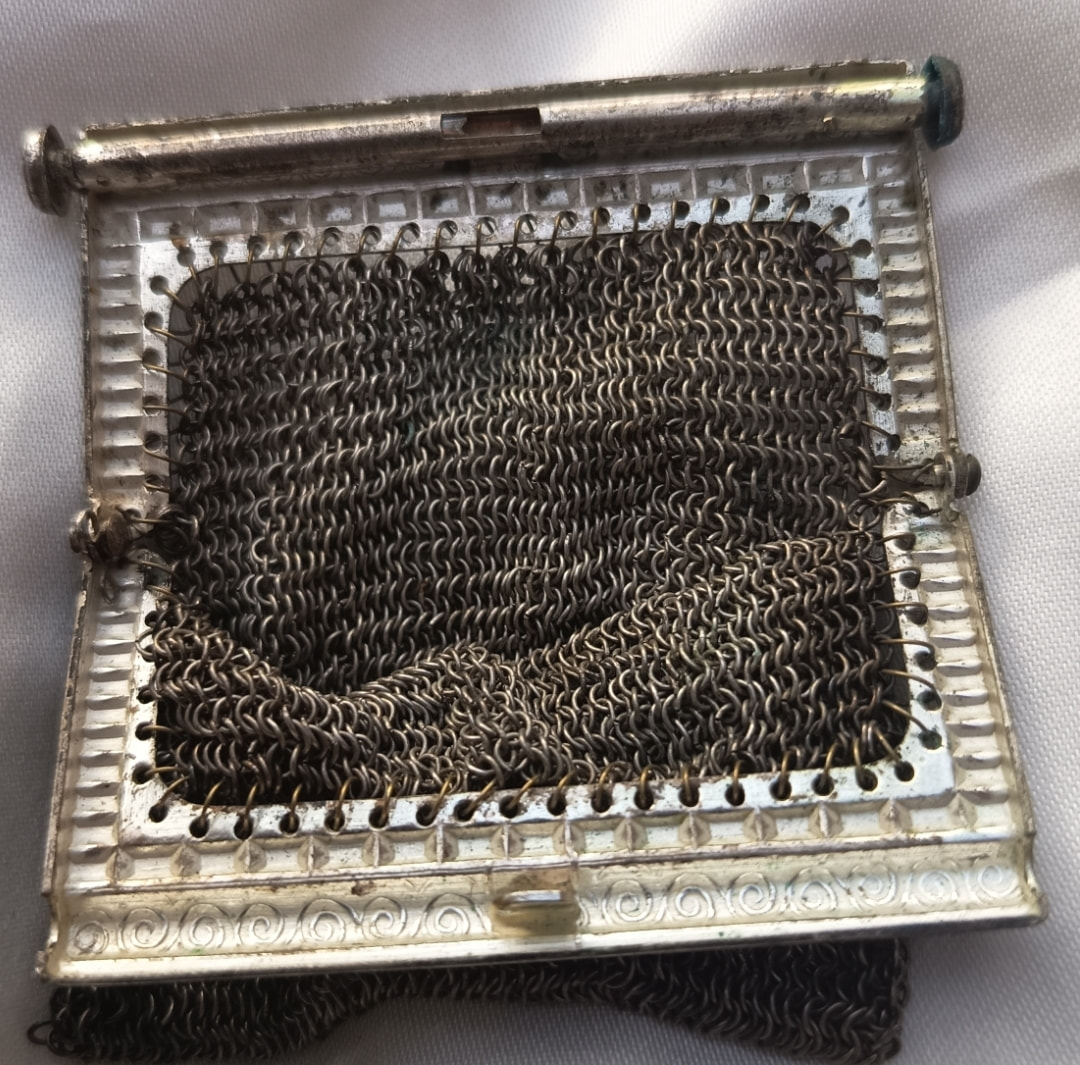
2 Likes
One additional thought came to mind after continuing my research, and I would be very interested in your opinions.
While comparing my purse with many antique examples, I also looked at later revival and reproduction models, including one currently offered on Etsy. Although it is clearly inspired by the original early 20th century mesh purses, I noticed that it uses a different construction and does not reproduce the mechanism found on my example.
This made me wonder whether my purse represents an earlier design that was never widely adopted or perhaps a more specialized mechanism.
If revival versions brought these purses back into fashion, I would have expected to find more surviving originals or reproductions using the same opening system. Instead, this particular construction seems surprisingly difficult to find.
Do you think there is a historical reason for this?
Could it have been an expensive or technically demanding mechanism, something protected by a patent, limited to one manufacturer, or simply a design that never achieved widespread production? Or is it possible that examples still exist but are simply very uncommon on today’s collectors’ market?
I would be fascinated to hear your thoughts, especially from anyone who has studied these purses or encountered similar mechanisms before.
1 Like