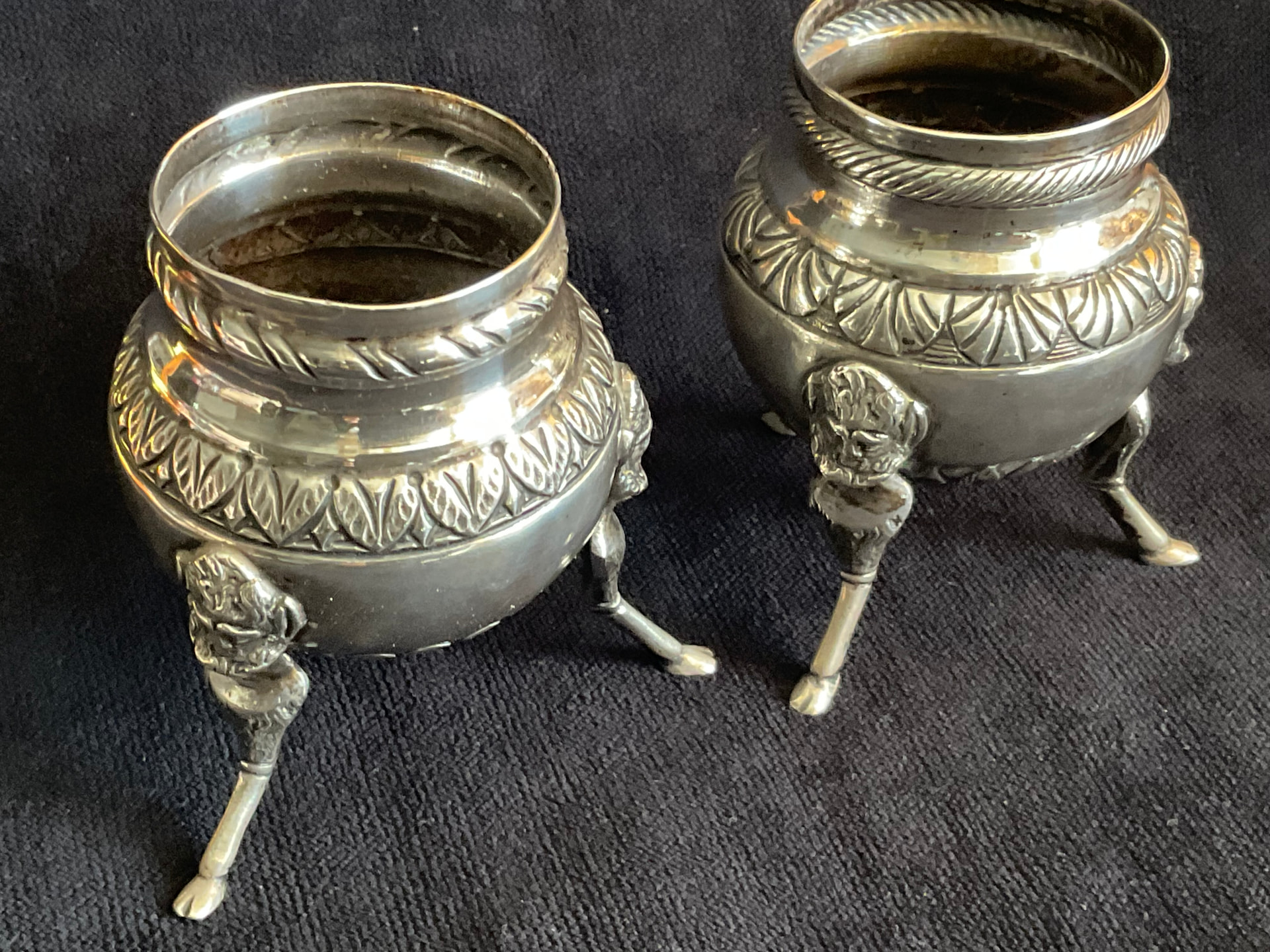
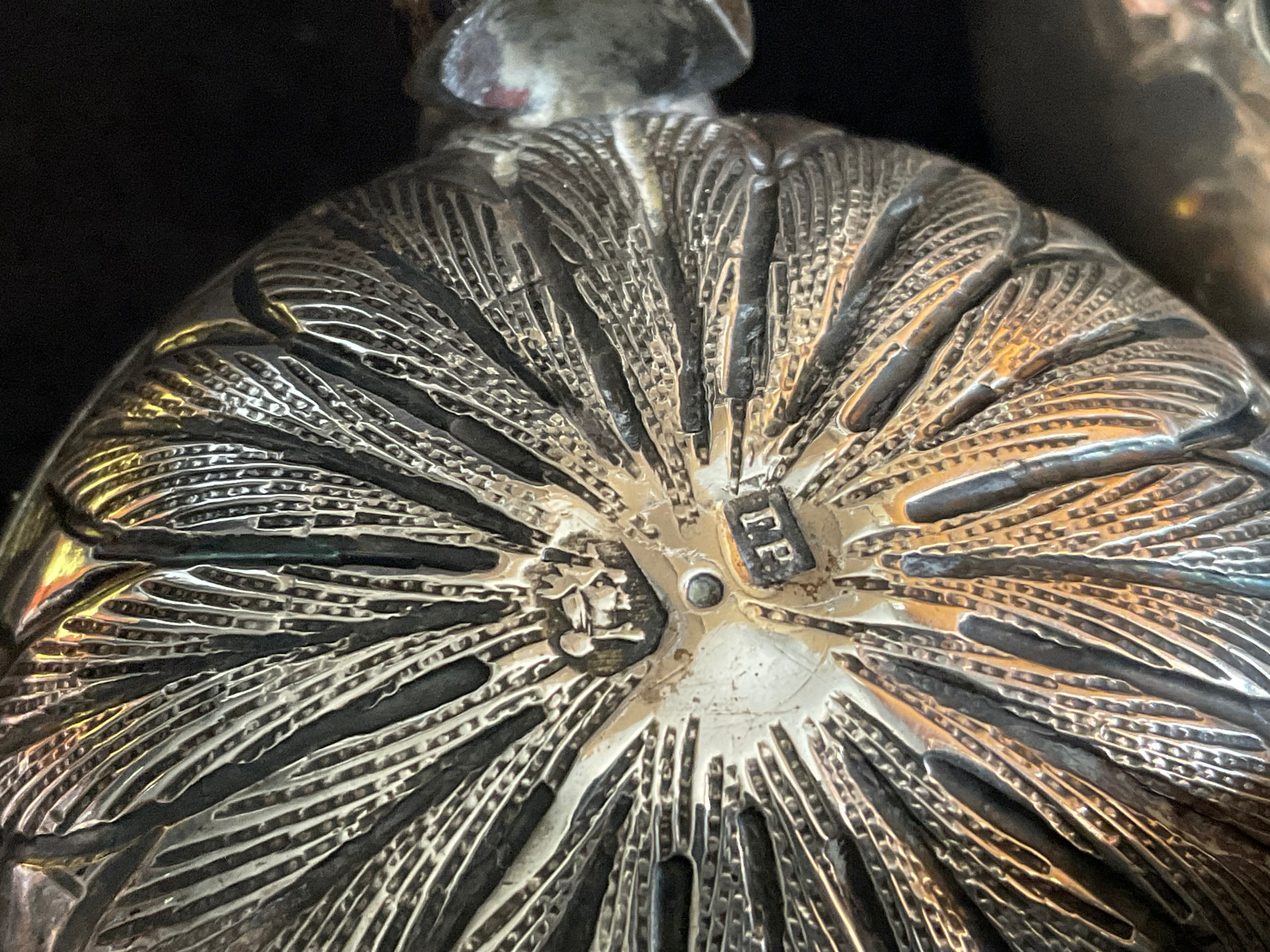
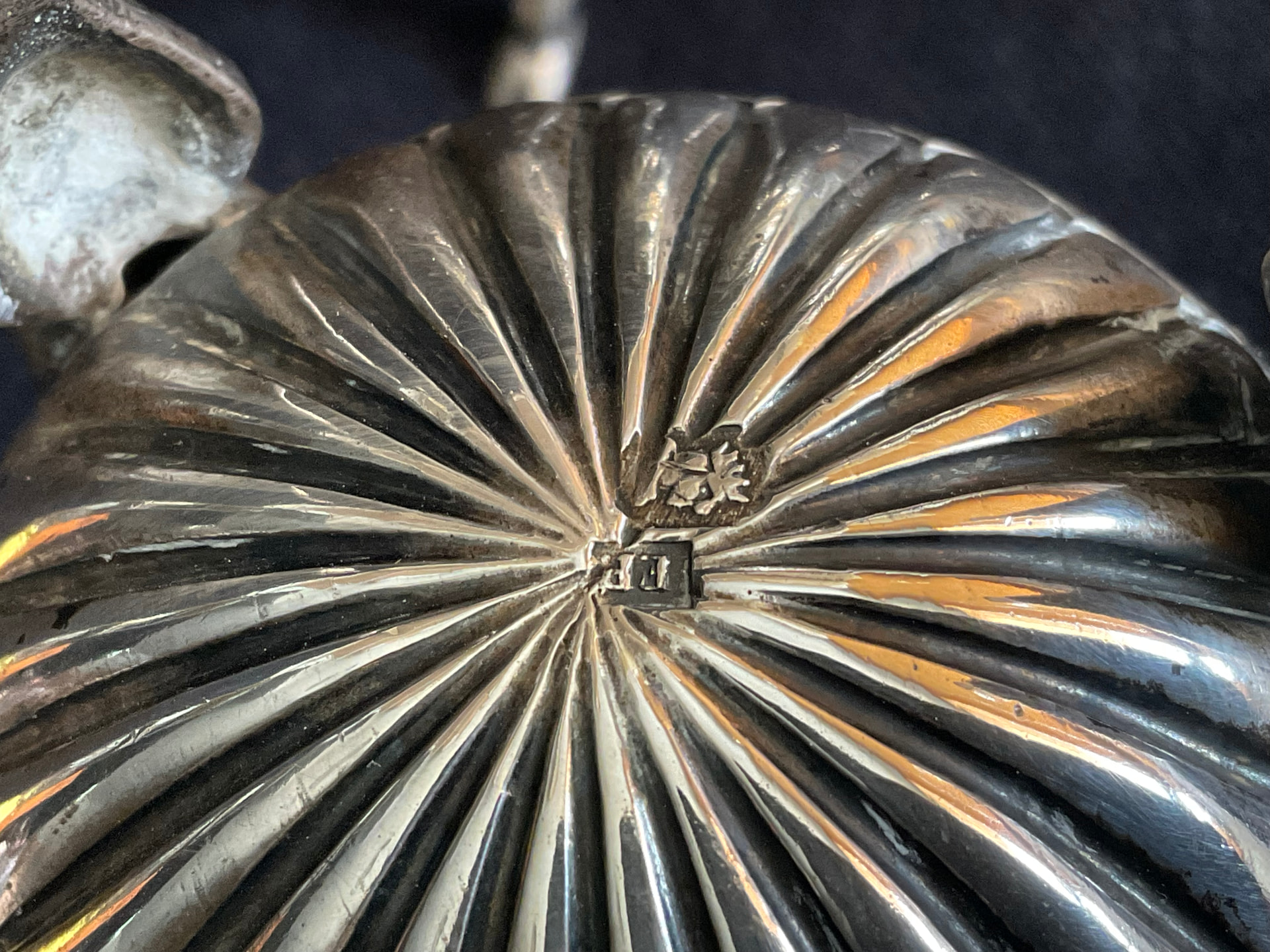
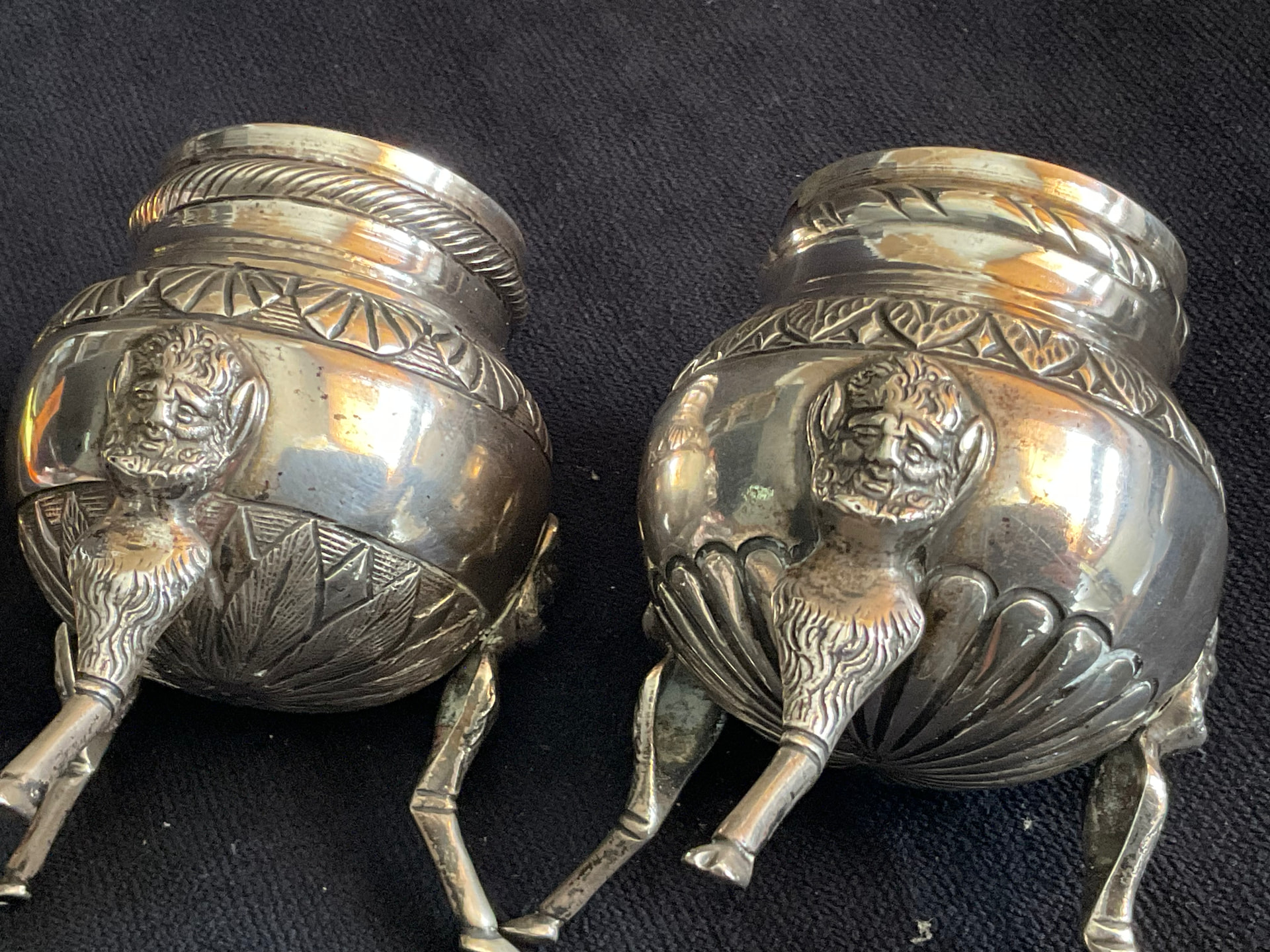
Can anyone provide guidance on the time period and country of origin of these items? As always, thank you for sharing your knowledge.
2 Likes
So the first questions are what are they and from what are they made. My immediate thought would be German silver and Hanau marks on two bowls designed for Haldi Kum Kum ceremony and aimed at the Indian market. The elephant feet and the very Germanic utterly inappropriate face masks point in that direction.
I am fairly clear F or T P isn’t an Indian silversmith and the European market for these items, unless you sell them as inconveniently-shaped salt pots, would be limited.
But you have them with you? Ae they silver or a base metal alloy? Easy to tell if you are handling them. Challenging from photos.
CRWW
2 Likes
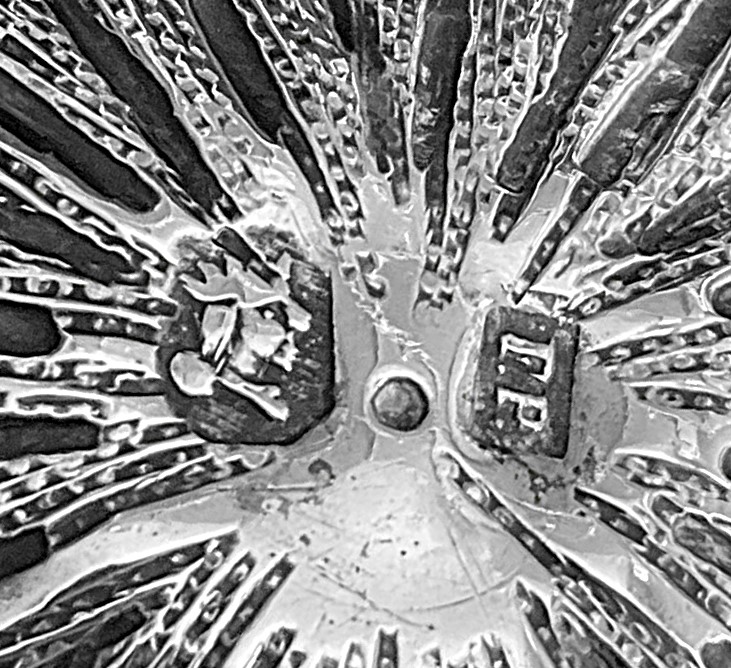
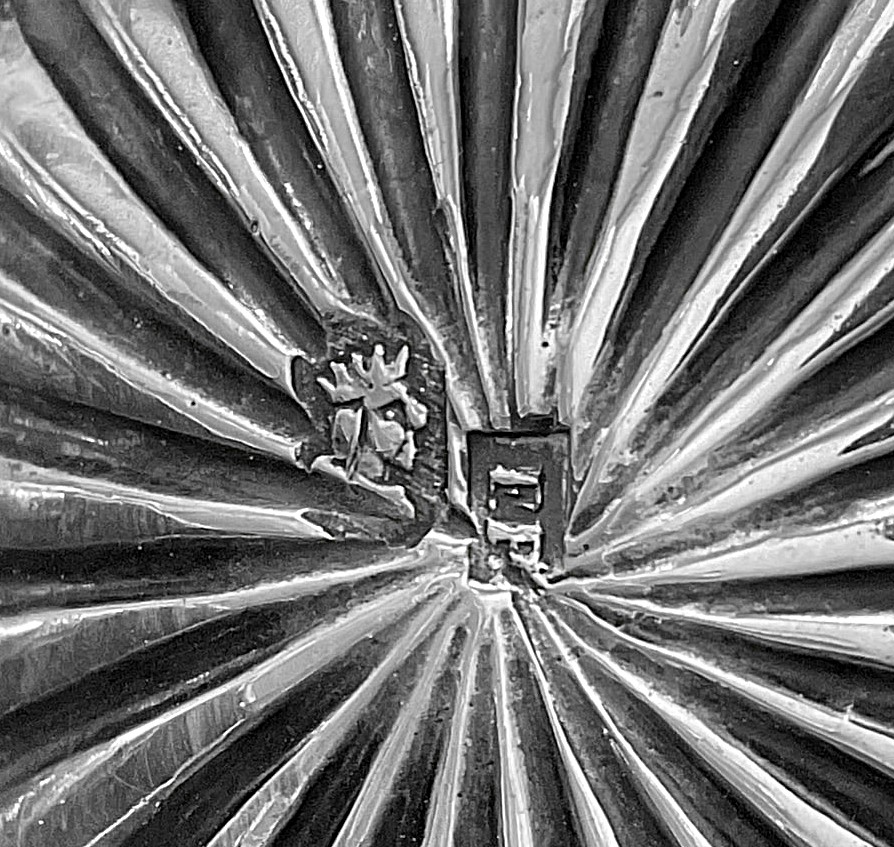
The head of a king wearing a crown, a face with coarse features and an unnaturally large nose.


E.P. - electro plated?
1 Like
Hello Guildhall,
Thank you for your comment. I was originally thinking of Hanau as well but not familiar with those marks. I do have them in hand and they feel like silver to me or at least a continental alloy like 833. I did not try to test them but I find the methods inconclusive and I don’t have access to a spectrometer. They came with a lot of mainly obscure silver. I can send more pictures of the other pieces but they’re all different so it may not shed light on these.
1 Like
If they look and feel like silver of some grade to you then that is probably what they are. I see Bart has found an Italian silversmith with almost identical items which are made of silver and look like it except that they don’t have the same rather Germanic mask at the join of each leg.
So I am not sure if the Italians made a similar item with the German type mask or it is indeed a Hanau copy of Italian silver in silver. I do note that your two pots are not identical, one looking as it is might be a one off hand-crafted copy of the other.
And whether they are made in Italy or Germany perhaps matters less than what they are made for and out of what material.
CRWW
1 Like
I’m sure they are 800 or above. As for their application, as said they would be unusual open salts though they came in a lot of silver which included some beautiful Maison Odiot salts, as well as some French cups, and probably Indian cups and bowls. I will attach some pictures of those. Thank you.
1 Like
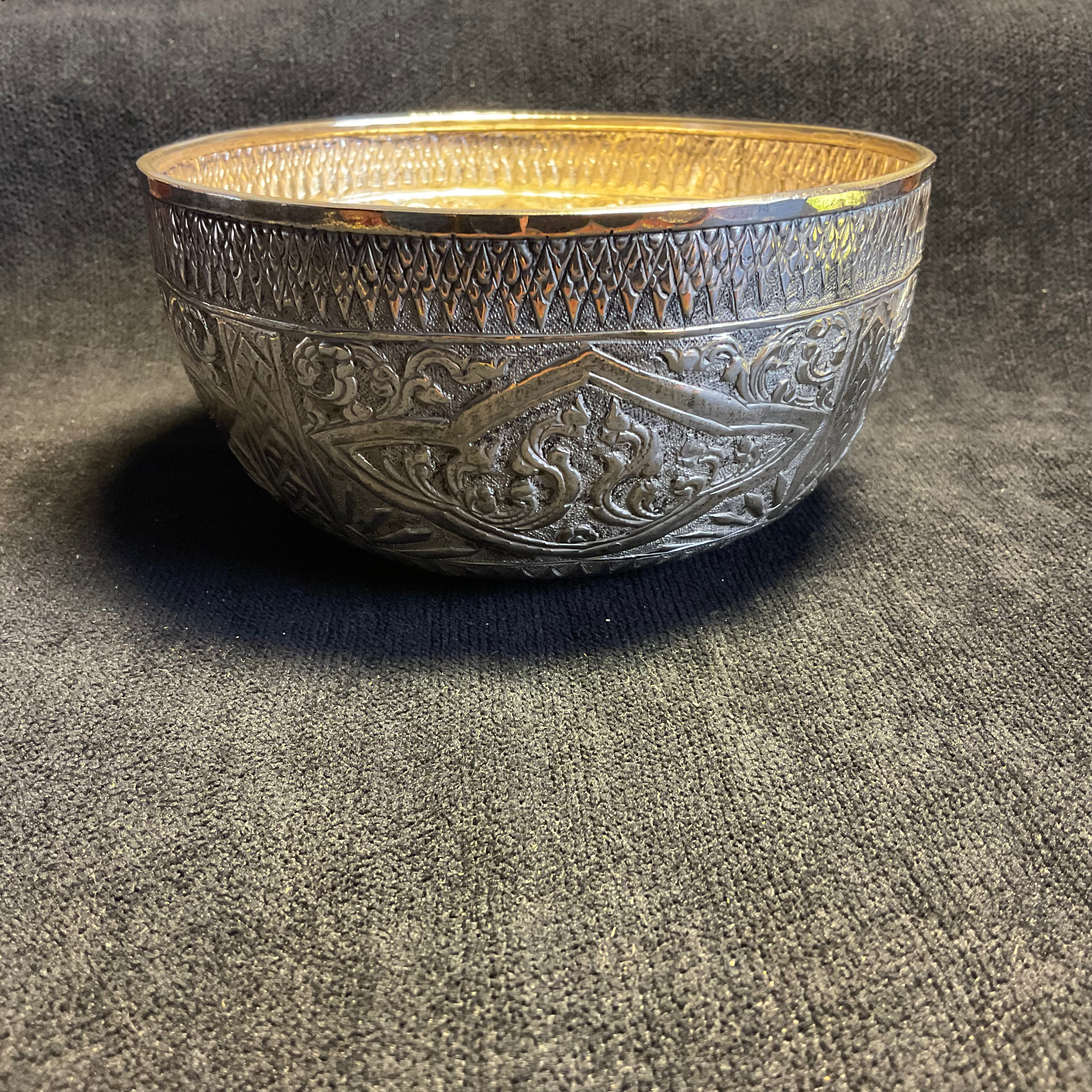
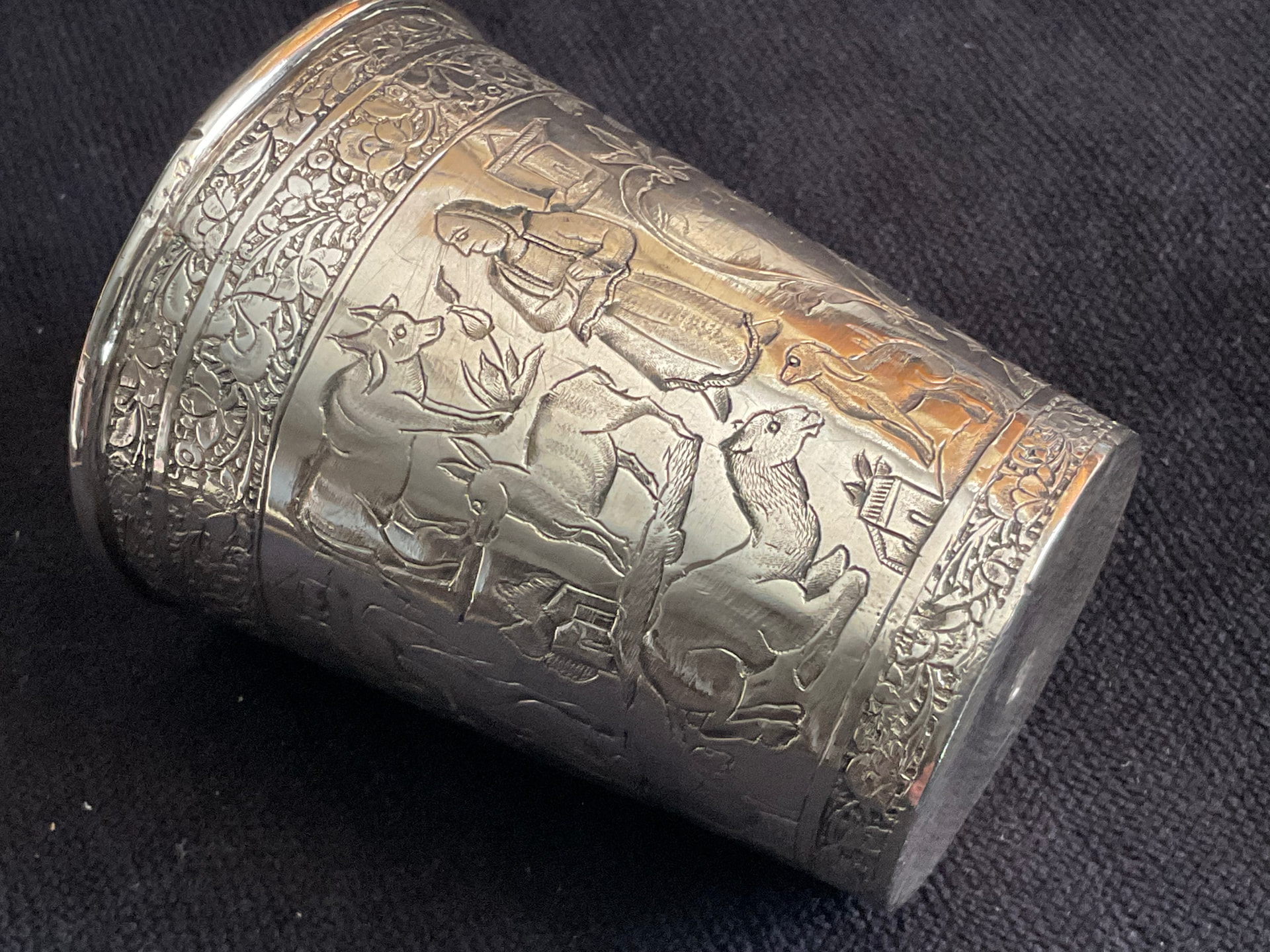
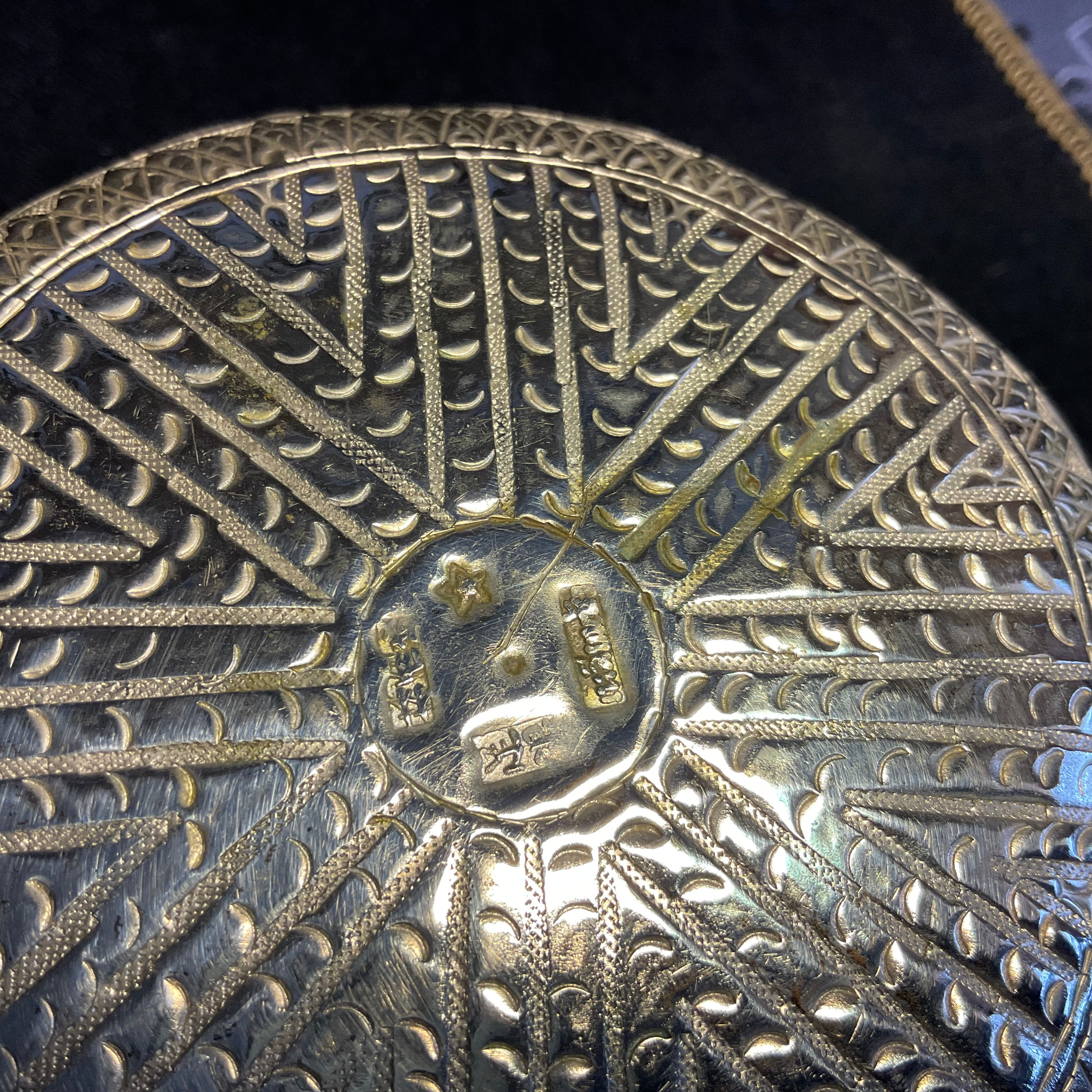
Thai or Burmese, I suppose.
1 Like
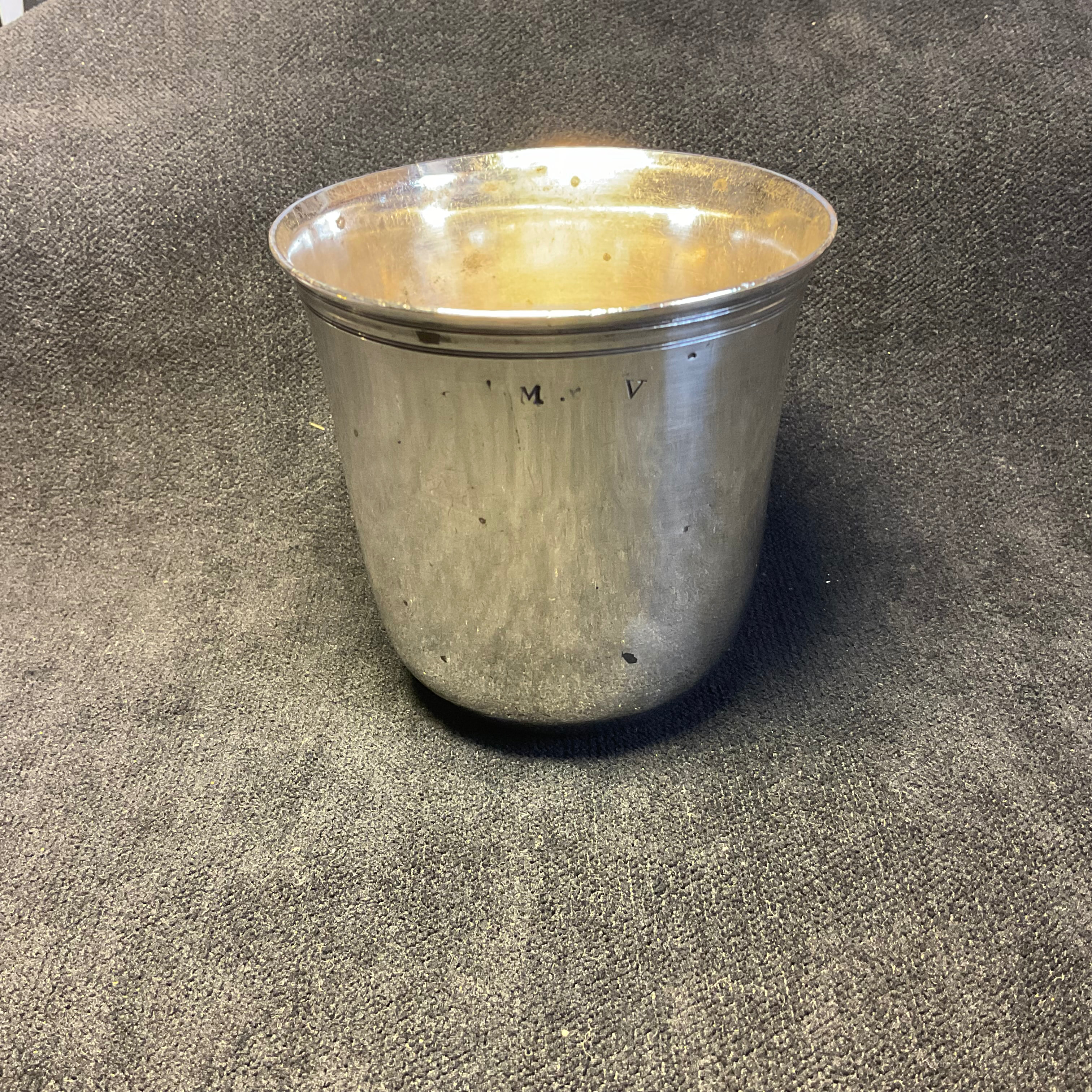
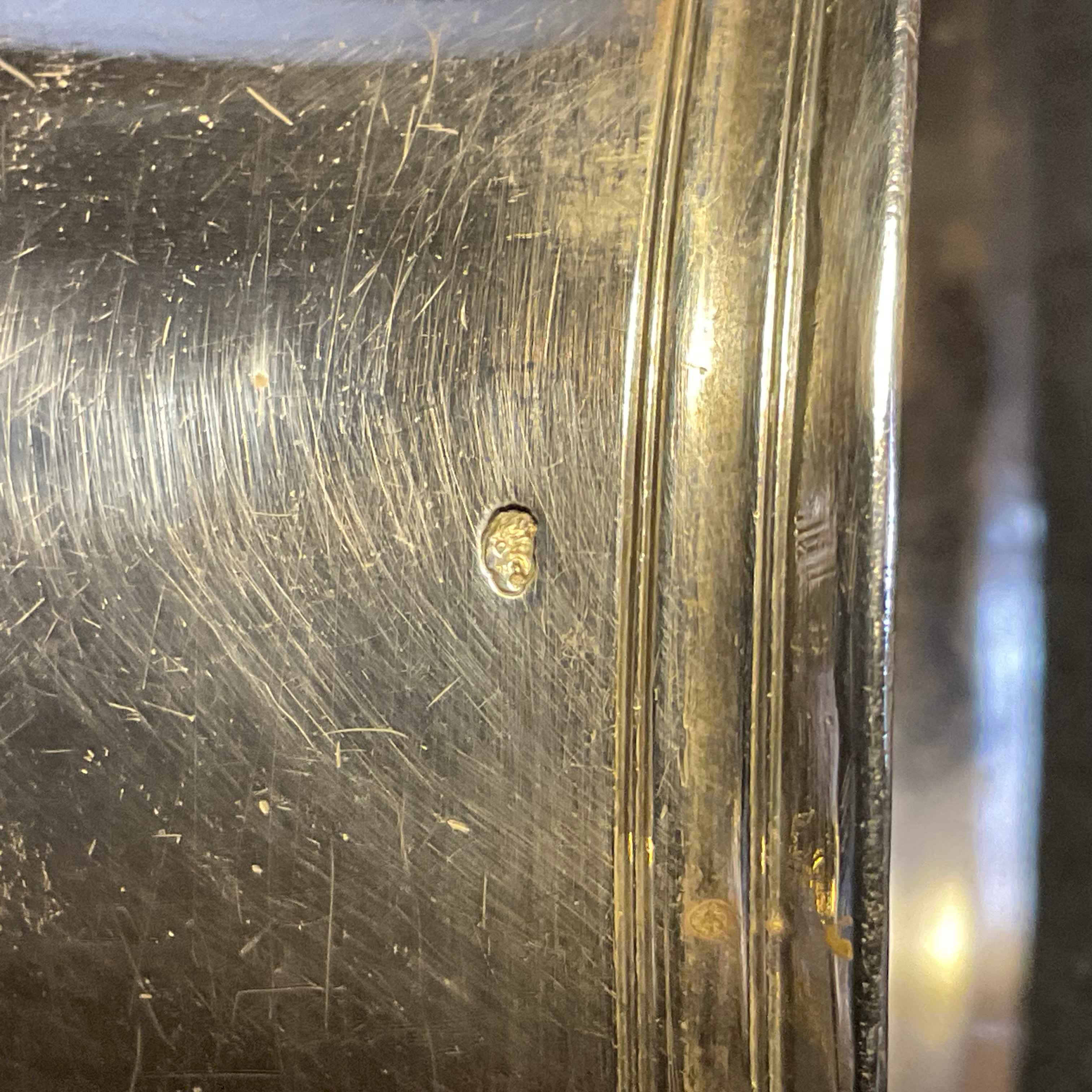
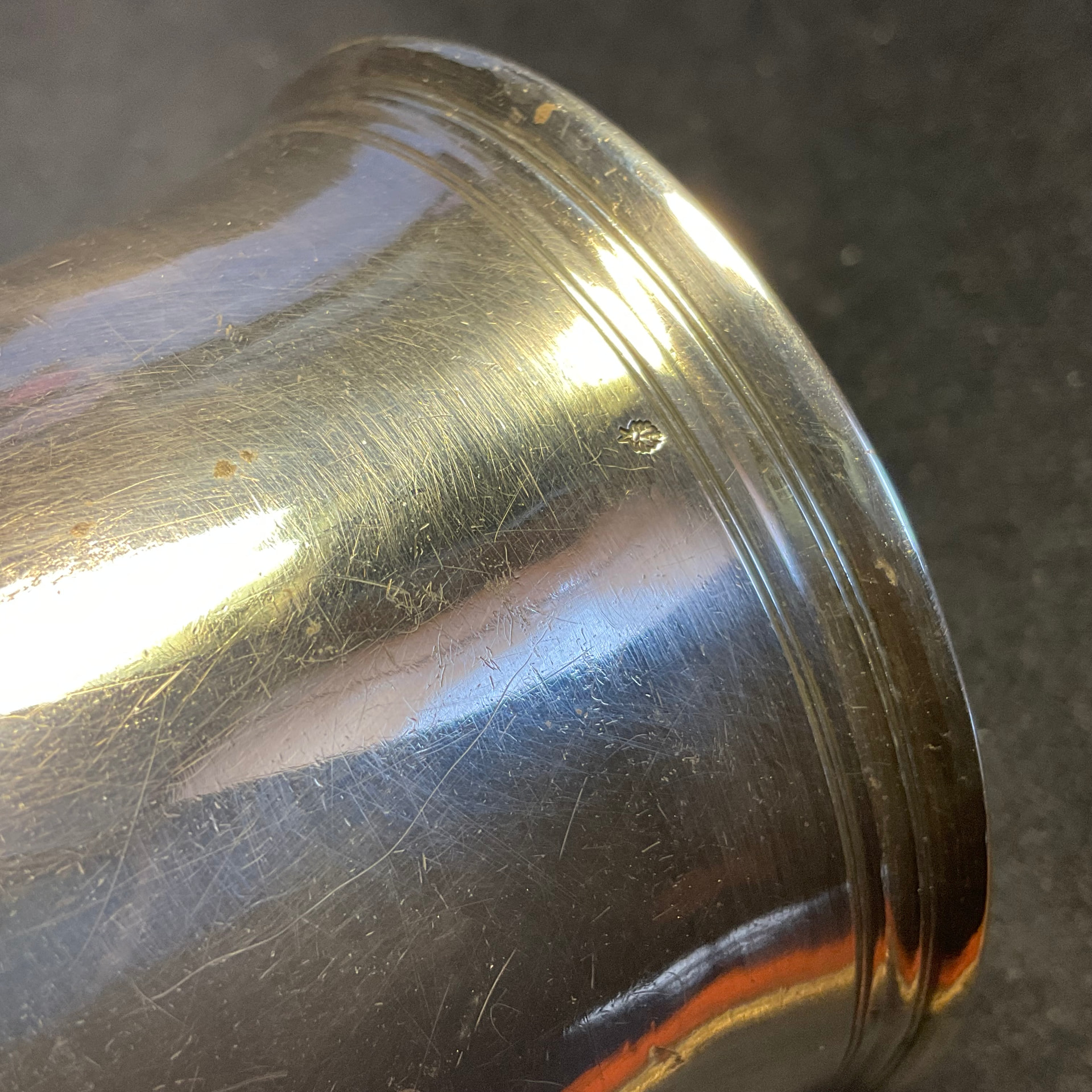
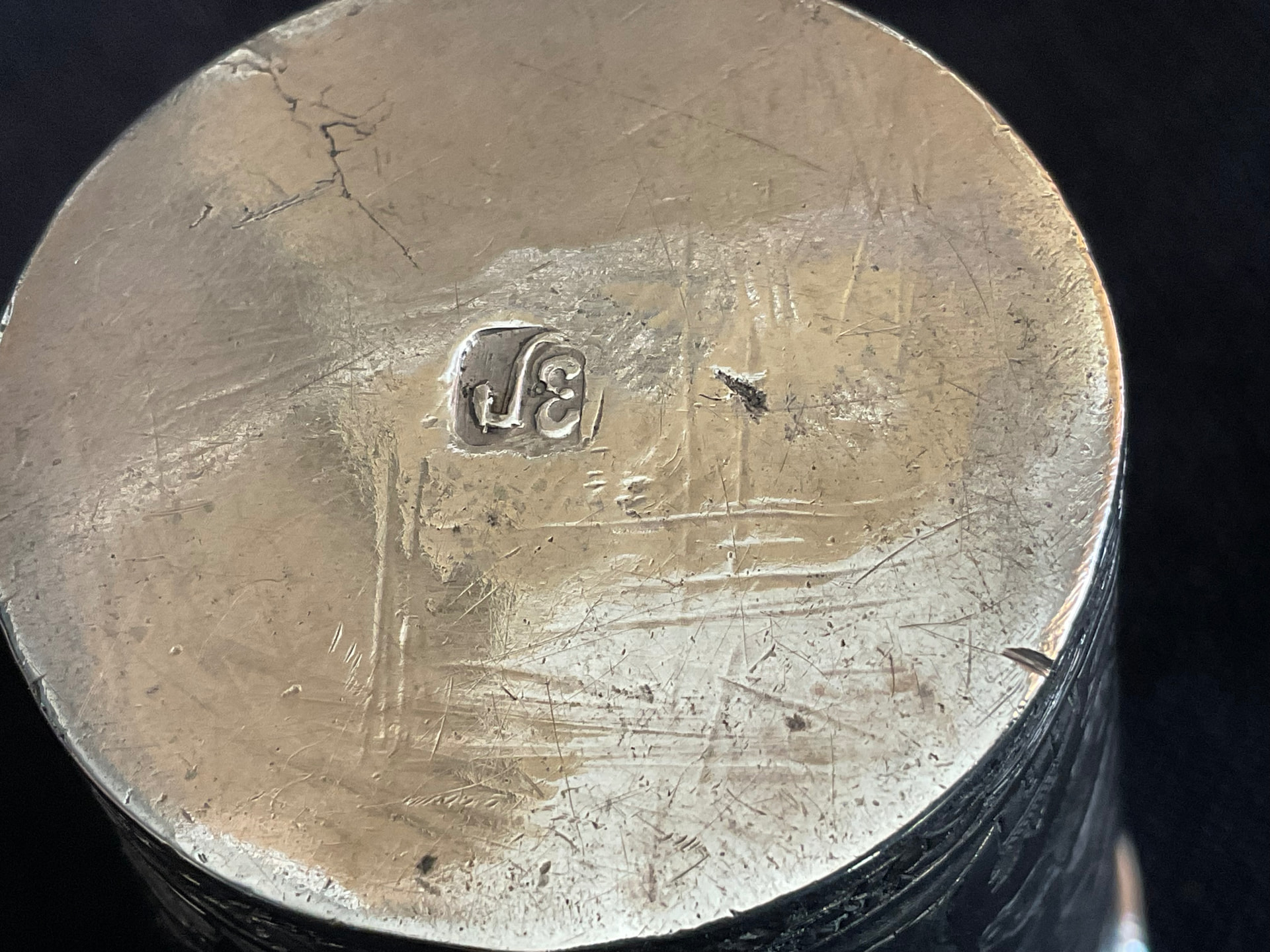
This cup was more interesting. French I presume? Do the letters below the rim of the cup have a meaning? Thank you.
1 Like
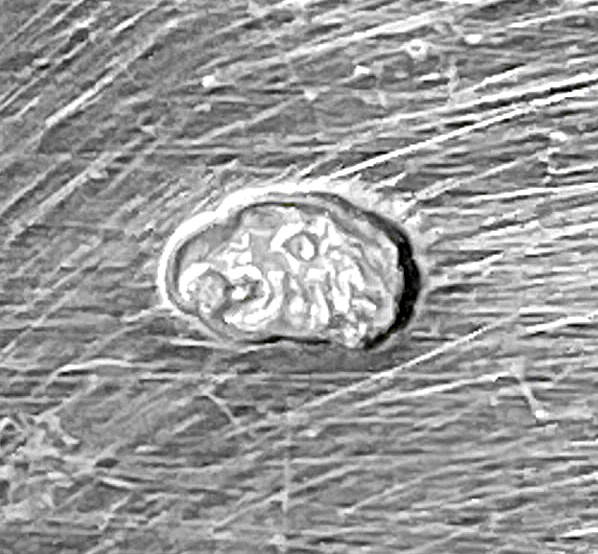
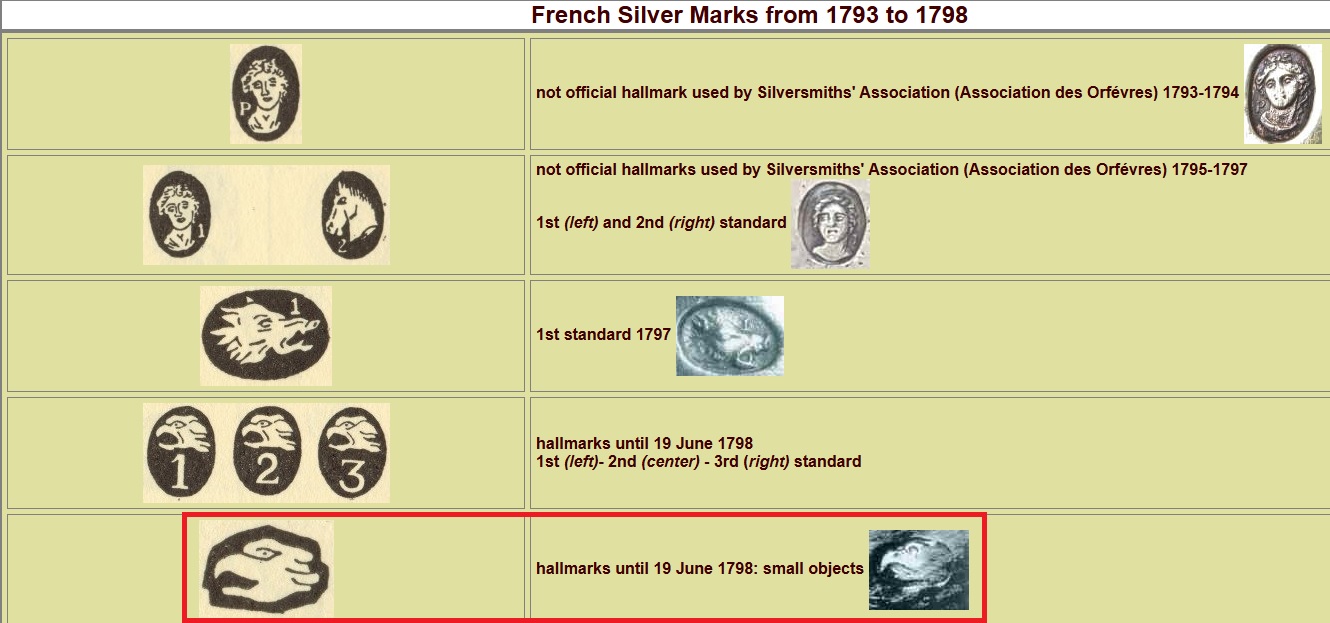
Are there any markings on the bottom of the vessel?
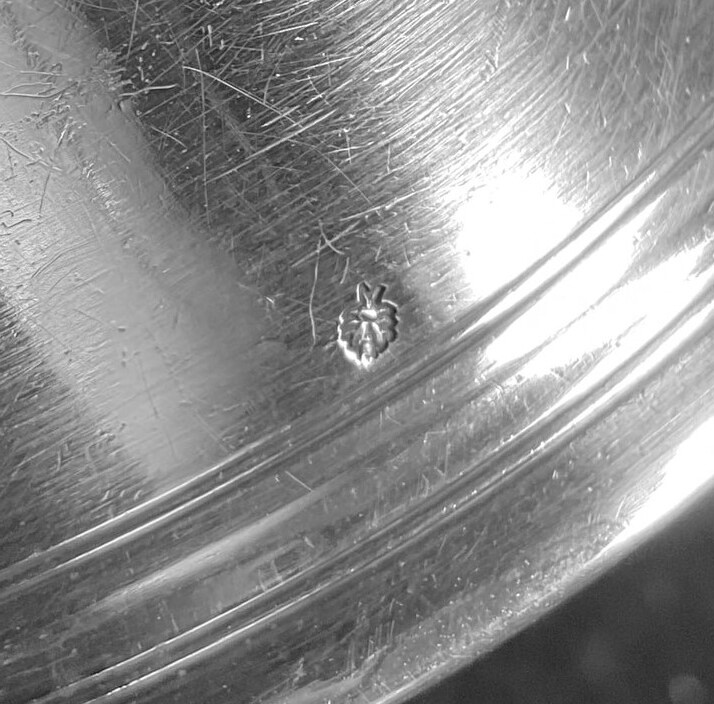
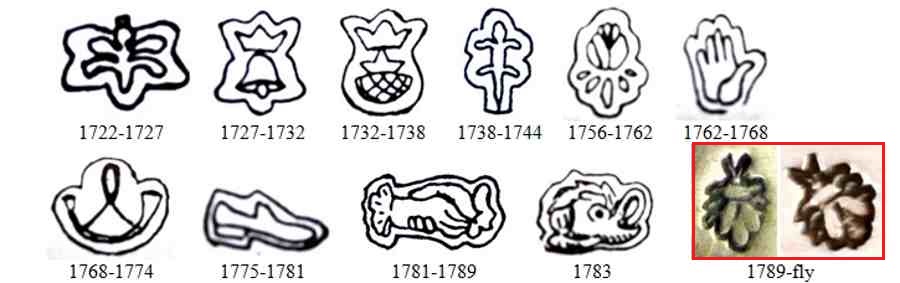
Source: French Inventory Marks (Poinçons de recense)
1 Like
As I suspected the additional material you acquired, and have now posted, does not much assist with the seminal question concerning origin of the pair of containers other than to urge a possible association with silver acquisition of East Asia.
I, indeed we all, have been asked by Phil not to multi-post and to limit comment to single post. The Forum owners apparently finds it less confusing, for archival purposes, if each item is given its own distinctive post.
I realize the primary function here was to point to origin by way of item association but, as I understand it, the guide rule still stands.
If I am wrong in this assumption someone will steer us all correctly!
CRWW
2 Likes
As usual, to the point!
Let’s maintain order. Chaos is the prelude to anarchy…
1 Like
Of course. I see how this is creating confusing mixing up the topic with multiple items. Thank you once more for sharing your knowledge.
2 Likes
Hello everyone,
I’m convinced these are Italian fantasy marks.
Other items with these marks can be found here.
2 Likes
Hi Andrea! Nice of you to grace us with your presence again! I knew someone would solve this mystery eventually. Hats off to you! 
“The “mark of Sir Alexander Ball” in the context of Maltese history and silver refers to a specific period (roughly 1798–1801) when Maltese silver, often produced by local silversmiths like Gaetano Offennaghel or Mario Maruzzo, was engraved with British emblems during the British blockade and subsequent administration of Malta.”
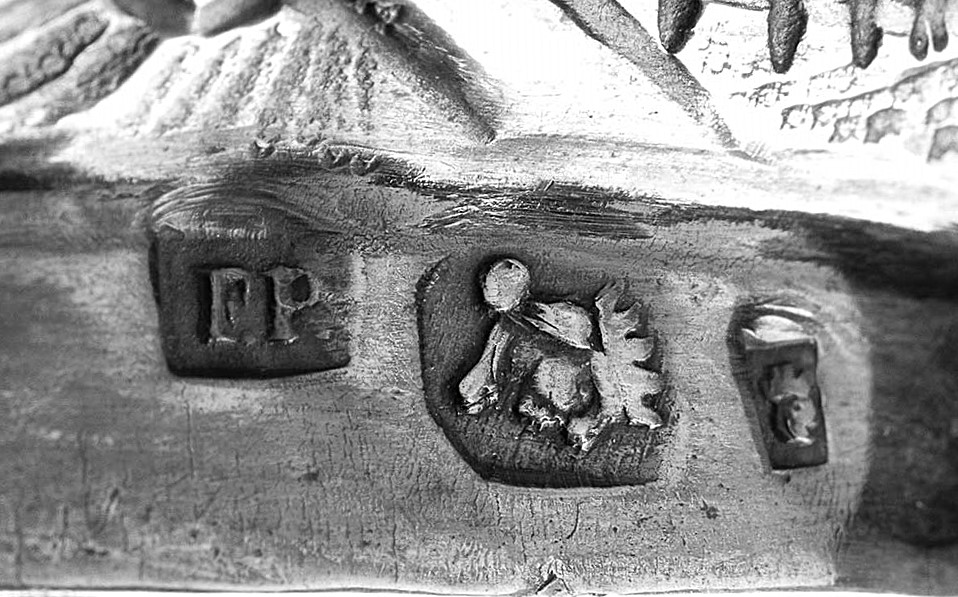
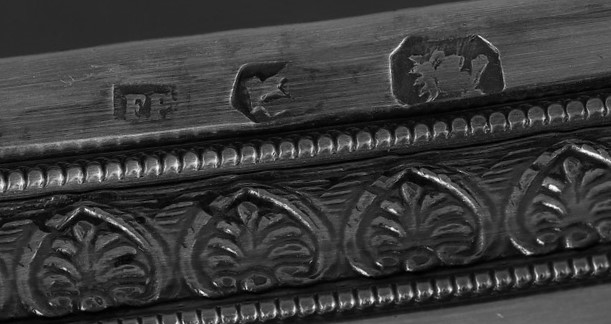
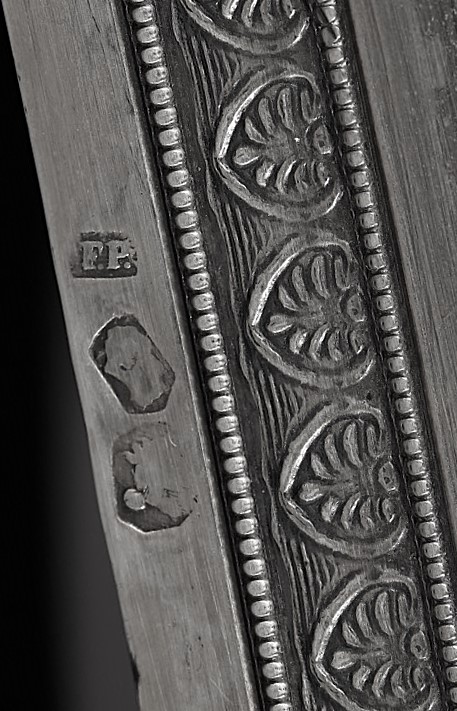
FP - Francesco Antonio Penoglio?
1 Like
First of all, my thanks to Bart for his warm welcome back. As for the mystery, it’s perhaps too early to consider it solved.
When I published the sentence (October 2023),
“His mark seems genuine, and this takes us back to the early nineteenth century.”
I was completely convinced that the closed fist mark was genuine, but now I’m no longer sure.
I’m waiting to consult a book I don’t have, then I’ll return to the subject.
Best regards
Amena
2 Likes
So we are looking forward to the good news! 
1 Like
Well, we left off with the photo of the big-nosed king with the clenched fist mark.
.jpg)
This left me rather perplexed, but I thought the mystery would be solved sooner or later.
But then I came across a teapot with an even more inexplicable hallmark.
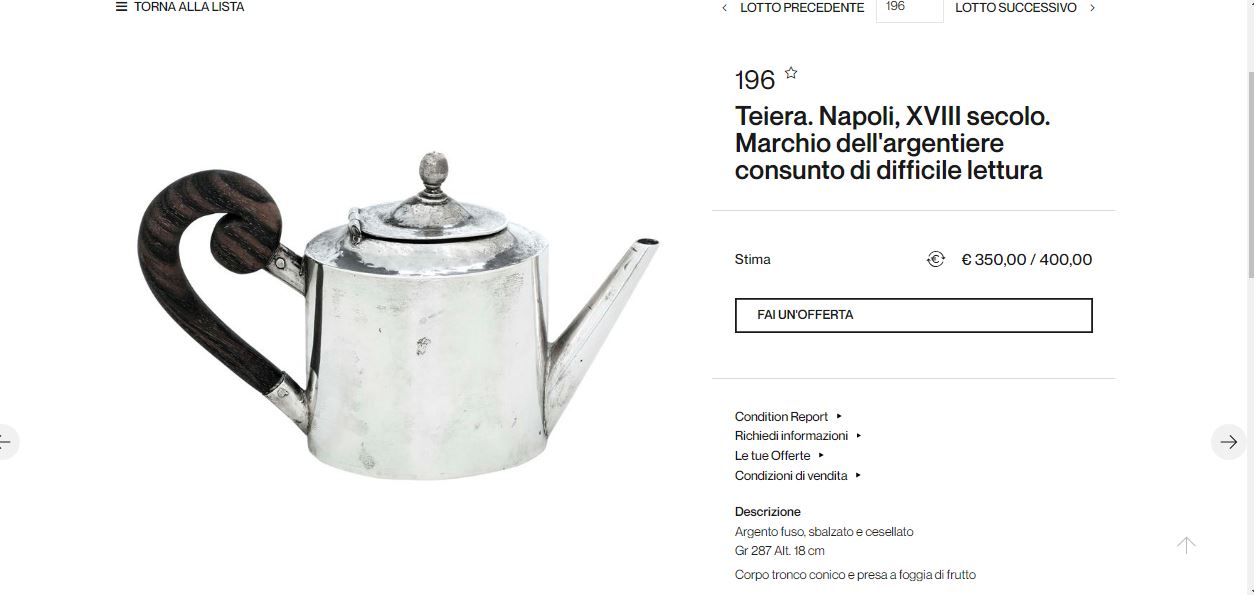
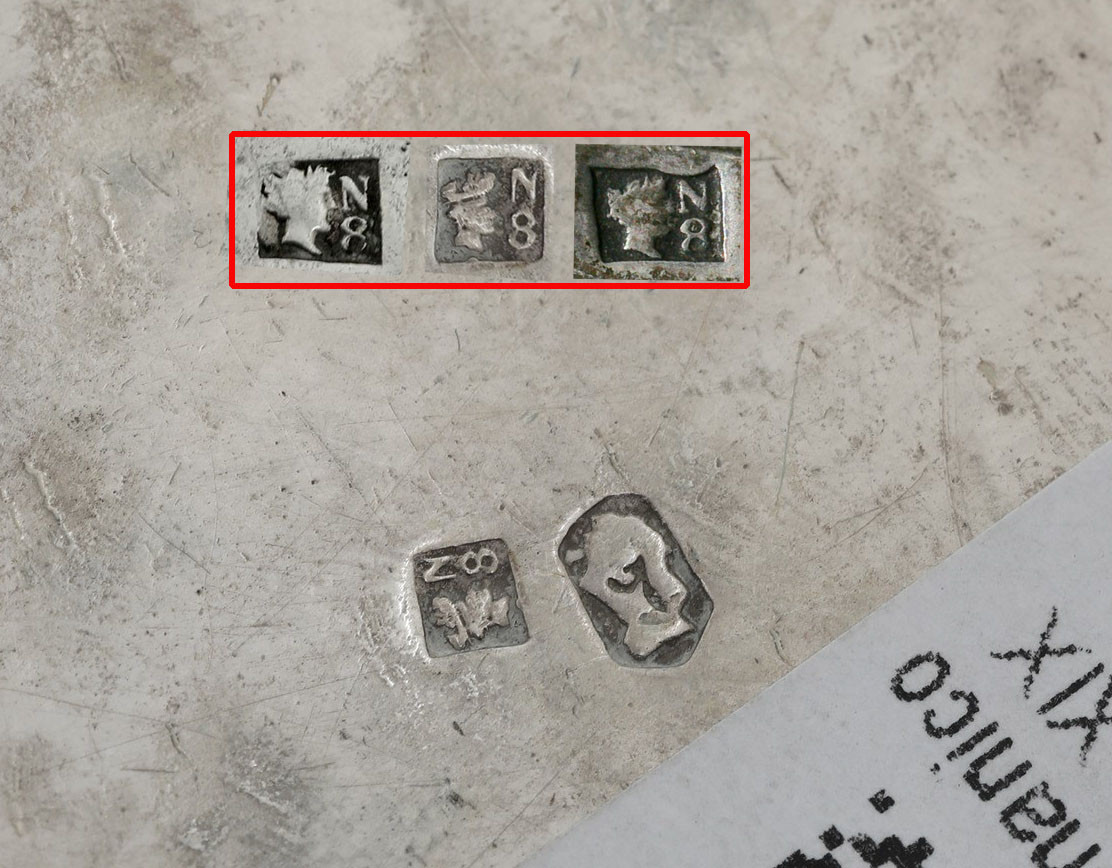
Along with the perfectly impressed clenched fist, there is a mark, also perfectly impressed, but visibly fake, which poorly imitates the hallmark of Naples that came into force in 1832.
A plausible explanation must be found for the fact that the consul of Maltese silversmiths in office around 1798-1801 applied only his mark to this teapot, without also applying the certified fineness mark. A plausible explanation must also be found for the fact that after more than thirty years, a forger saw fit to add a false hallmark of Naples to this teapot.
A plausible solution could also be that both marks are fakes—both the clenched fist, which is quite believable, and the head of Parthenope, which is completely unbelievable—and were applied by the forger at the same time, without much concern for the coexistence of these two marks.
Following this lead, I thoroughly studied the fist, found along with the big nosed King and the fake head of Parthenope, and compared it to other marks of the clenched fist.
I presented my conclusions in this post
https://www.925-1000.com/forum/viewtopic.php?p=235658#p235658
Essentially, I am convinced that, as I said before, all the various marks we have discussed are fakes used at random by a forger at an unspecified time.
An antiques dealer who deals only in silver, at whose shop I saw a holy water bucket bearing similar marks to those on my bucket, classified it as dating back to the 1960s, judging it based on its workmanship.I don’t have the knowledge to judge whether he’s right or not.
Naturally, I’d be happy to hear your thoughts on the matter, whether you agree or disagree, or whether you think there’s something to clarify in my opinion.
Best regards
Amena
1 Like