Afternoon all.
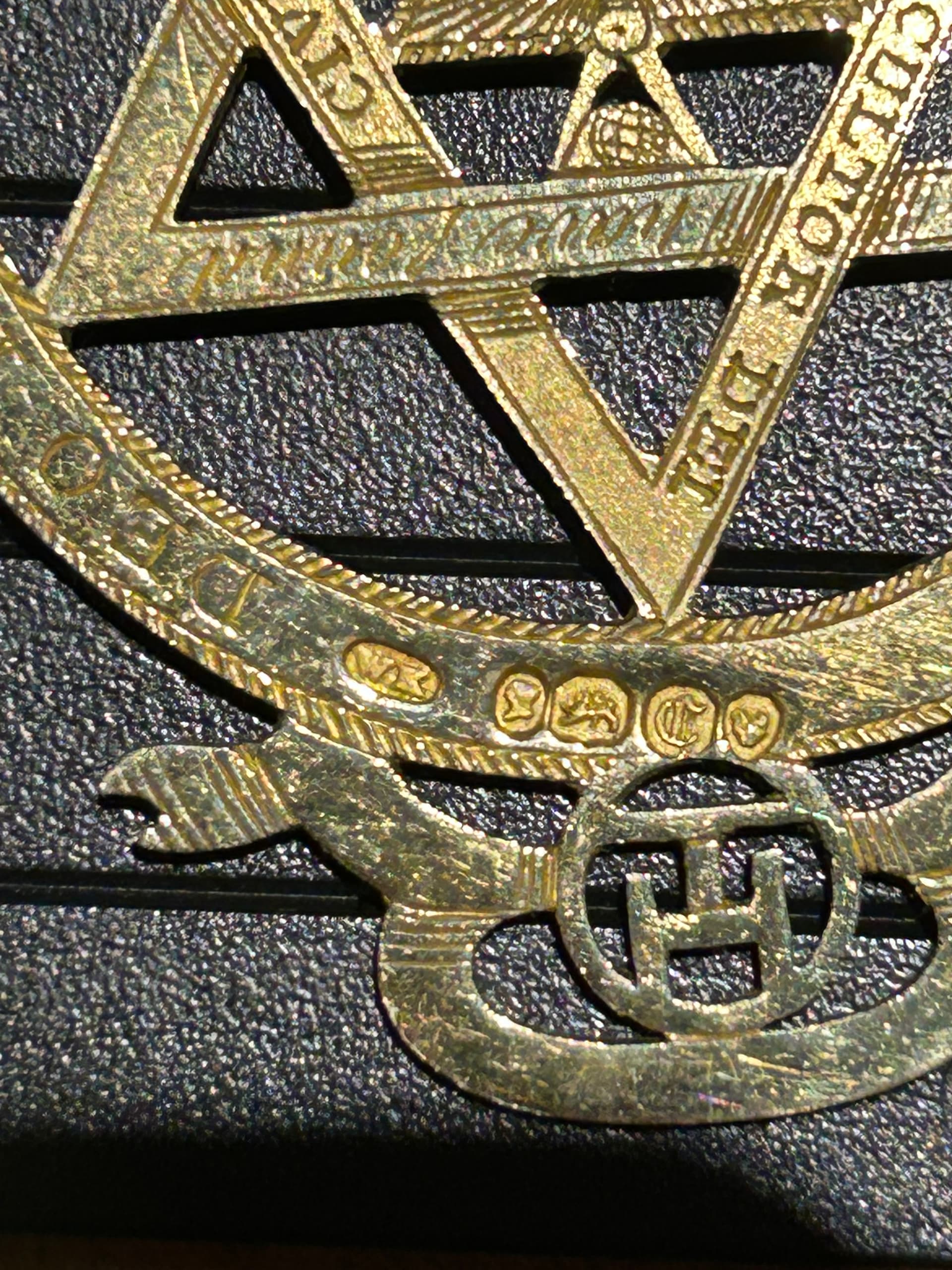
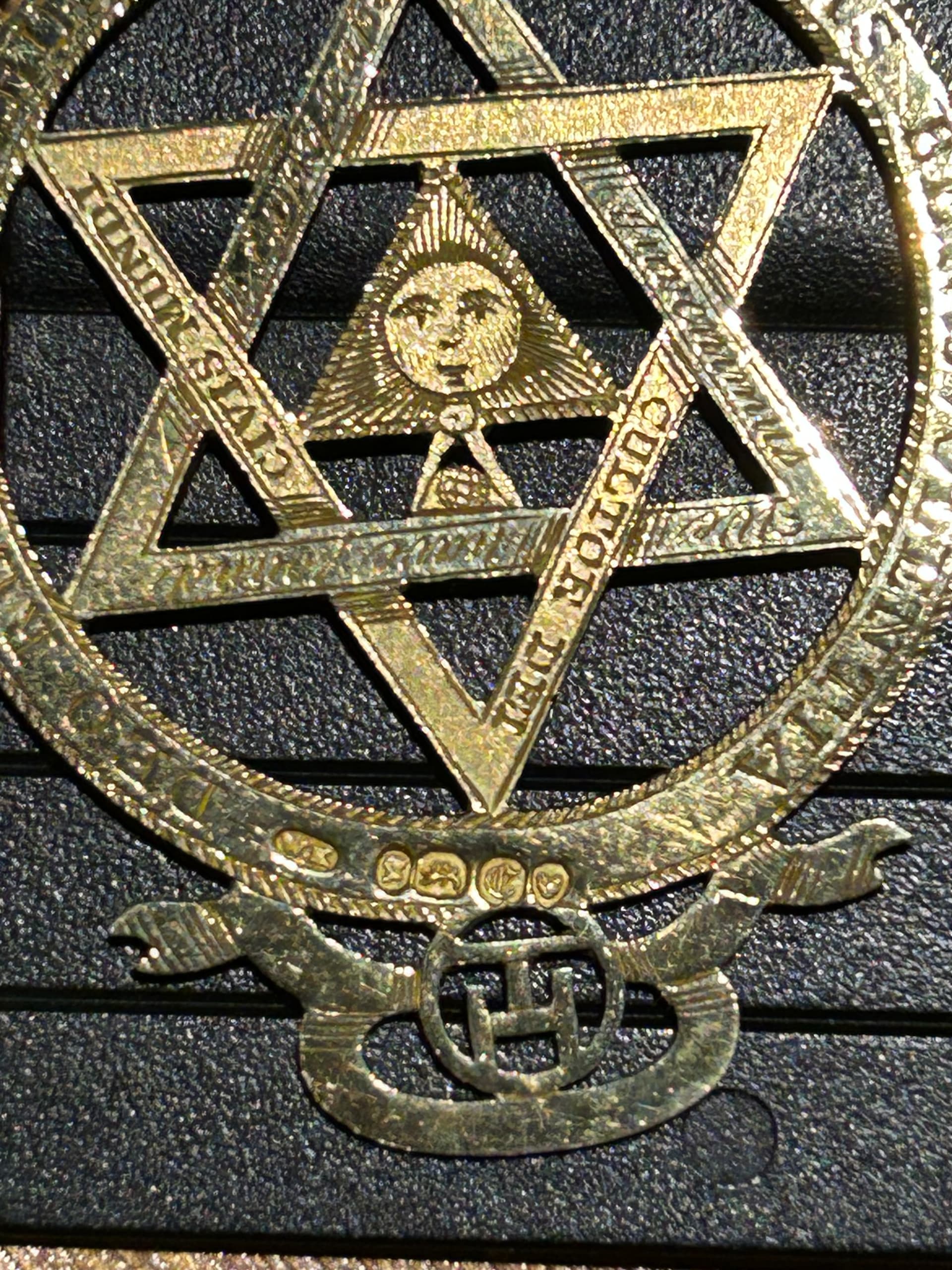
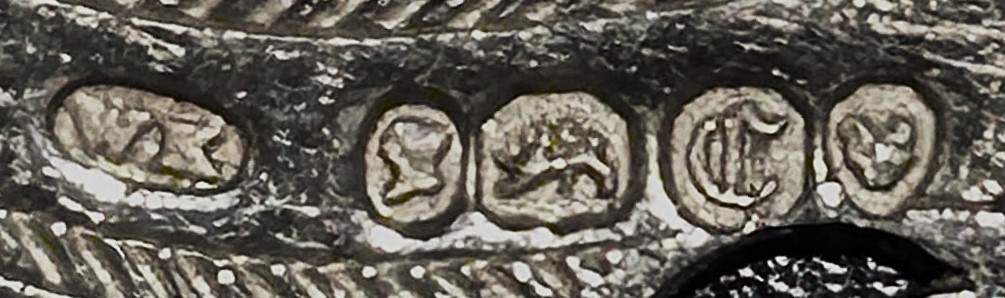
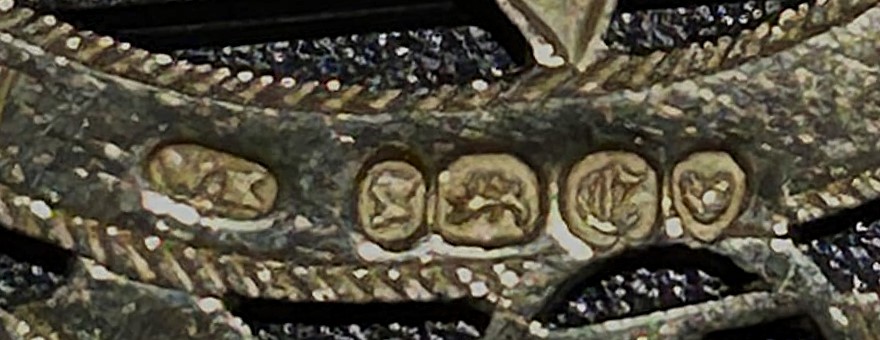
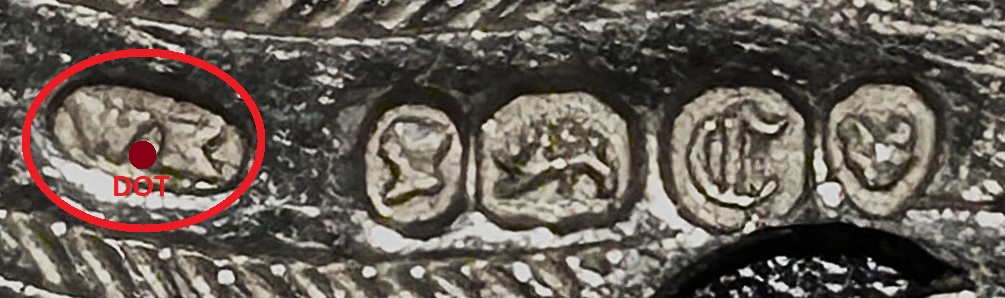
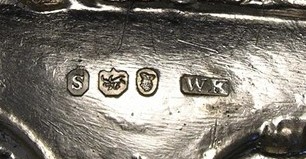
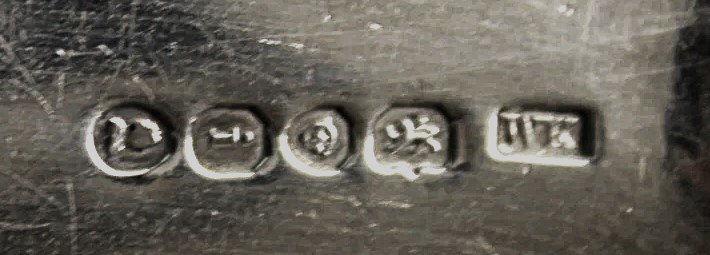
I was wondering if anyone had a name for this makers mark. It is a friends Masonic jewel and, unfortunately, these are the only pictures I have.
any help would be greatly appreciated
regards
Arthur
Afternoon all.
I was wondering if anyone had a name for this makers mark. It is a friends Masonic jewel and, unfortunately, these are the only pictures I have.
any help would be greatly appreciated
regards
Arthur
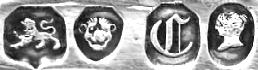 C - 1838, London but I’m not sure 100%…
That’s the date.
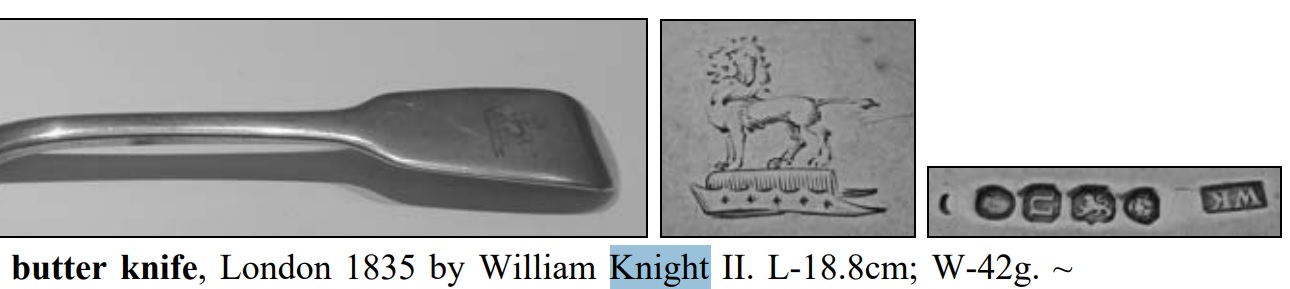
William Knight II entered his first mark as small worker, in partnership with his brother Samuel in 1810, the second as plate worker in 1816. and the third in two sizes in 1830. His fourth and final mark was entered the following year.
Here, for comparison is a William King mark which is much nearer in shape than the rectangular mark of Mr Knight
William Knight was not a mason. I cannot tell you if Mr King was, but if he was that would make attribution much more certain.
CRWW
“Seal of Solomon or the Shield of David, for under both names the same thing was denoted. A hexagonal figure consisting of two interlaced triangles, thus forming the outlines of a six-pointed star. Upon it was inscribed one of the sacred names of God, from which inscription it was supposed principally to derive its talismanic powers. These powers were very extensive, for it was believed that it would extinguish fire, prevent wounds in a conflict, and perform many other wonders. The Jews called it the Shield of David in reference to the protection it gave to its possessors. But to the other Orientalists it was more familiarly known as the Seal of Solomon. Among these imaginative people, there was a very prevalent belief in the magical character of the King of Israel. He was esteemed rather as a great magician than as a great monarch, and by the signet which he wore, on which this talismanic seal was engraved, he is supposed to have accomplished the most extraordinary actions, and by it to have enlisted in his service the labours of the genii for the construction of his celebrated Temple. In time, with the progress of the new religion, it ceased to be invested with a magical reputation, although the Hermetic philosophers of the Middle Ages did employ it as one of their mystical symbols; but true to the theory that superstitions may be repudiated, but will never be forgotten, it was adopted by the Christians as one of the emblems of their faith, but with varying interpretations. The two triangles were sometimes said to be symbols of fire and water, sometimes of prayer and remission, sometimes of creation and redemption, or of life and death, or of resurrection and judgment. But at length the ecclesiologists seem to have settled on the idea that the figure should be considered as representing the two natures of our Lord - His Divine and His human nature.”
William Knight? I’m not so sure…
William Knight II, no dot, no oval frame…This particular style of WK mark in an oval punch does not appear in either of the 2 reference works covering the period so I can only assume that WK was an established silversmith whose mark was not inspected too closely by the assay office staff when this jewel was sent for assay. William Knight seems to fit the bill but I would only go so far as tom say “probably William Knight II”.
Thank you, that was most helpful. But given the lack of an oval punch for Mr Knight in the choice of two sizes of the 1830 sponsor mark which this would have been and given Masonic work is generally given to Masonic silversmiths which he was not, it is a not entirely clear case to make.
On the other hand I will agree that the mark attributed to Mr King on the small dish by Wax Antiques is also more a rounded corner oblong than an oval.
If one of the Forum readers has access to the Lodge’s records for London for the pertinent period, which I no longer do, then one might find out if King was a Freemason in which case the case for his shop becomes stronger.
Like you, I am currently agnostic pending further and better evidence. This might be one of those occasions when a visit to the Goldsmith’s library might resolve matters especially if, as you suggest, they were less than entirely diligent in the first place.
CRWW