1 Like
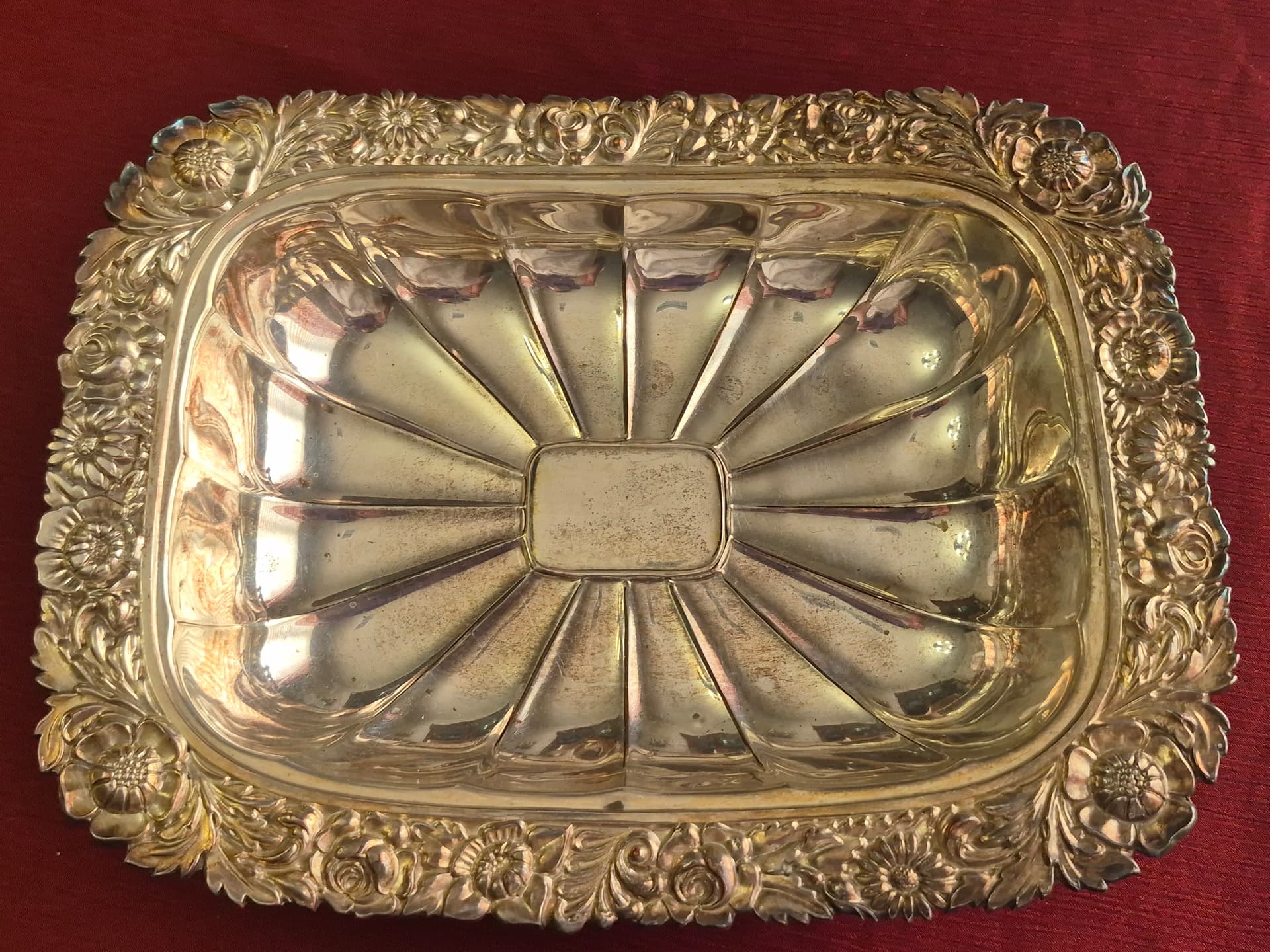
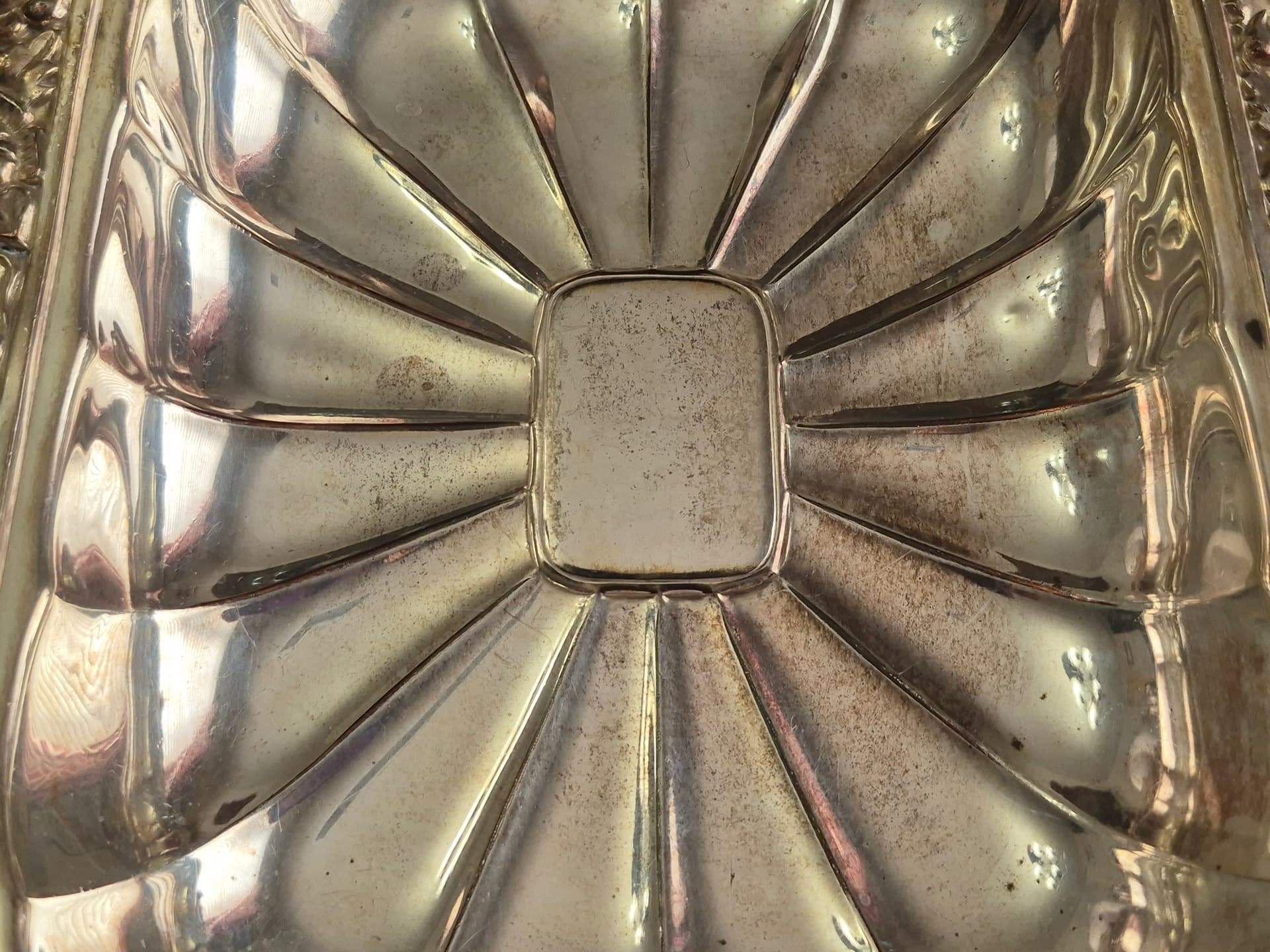
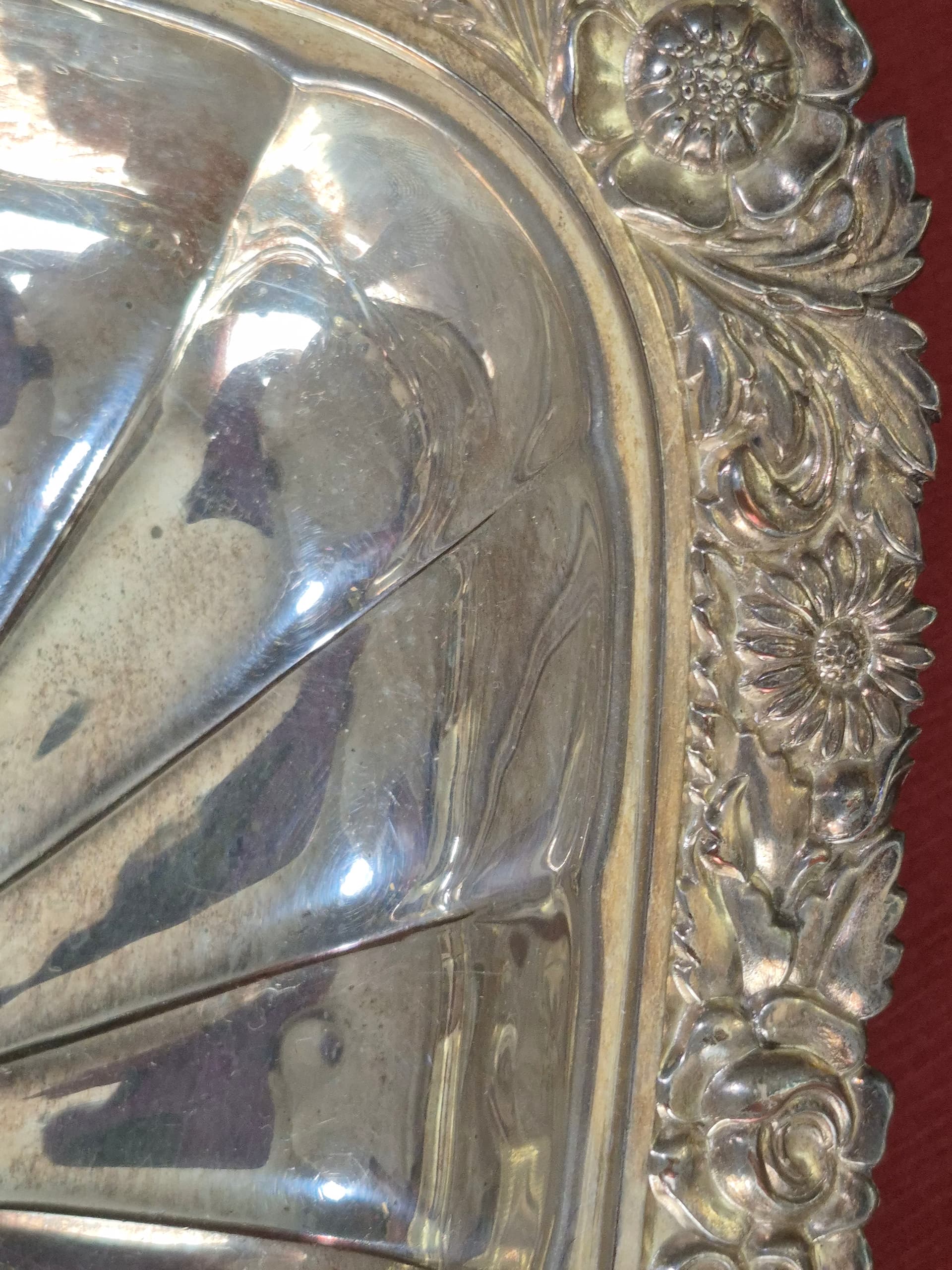
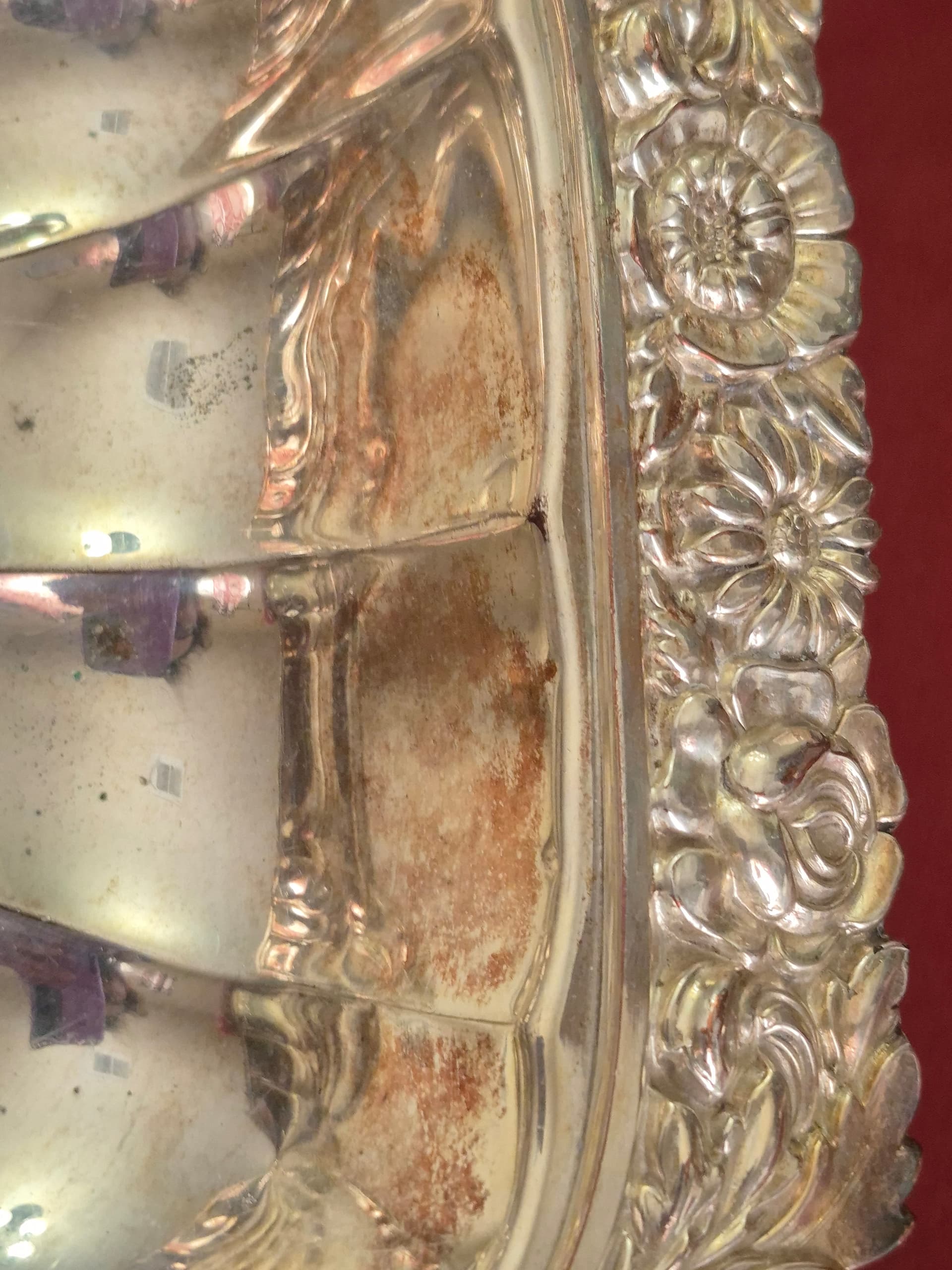
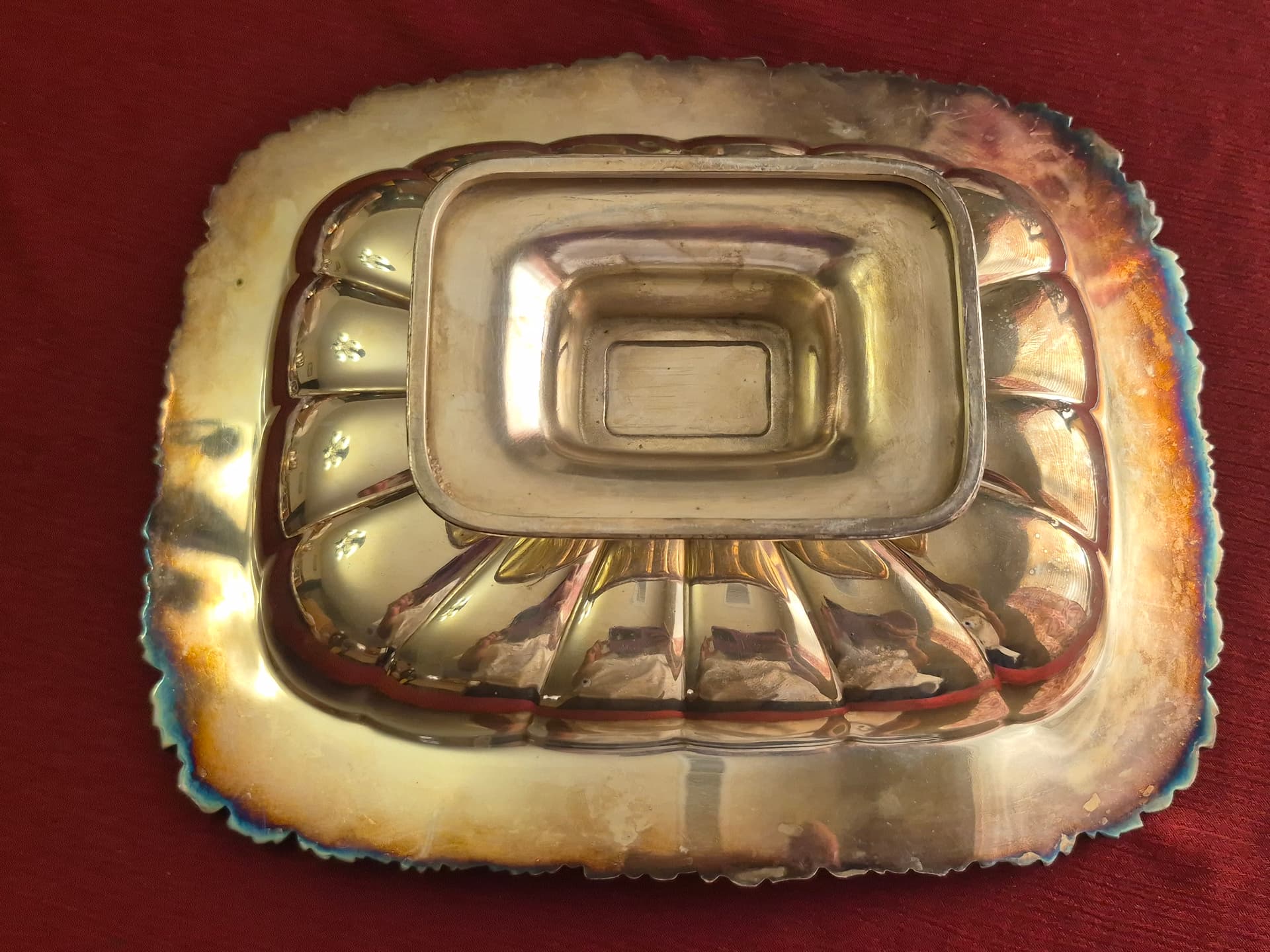
There is “bleed-through” of copper and no makers marks which sound like positives for OSP but shouldn’t there be more indications of the '“seams” that run throughout the edges of the piece if it were real OSP? There is a seam on the base of the piece though.
1 Like
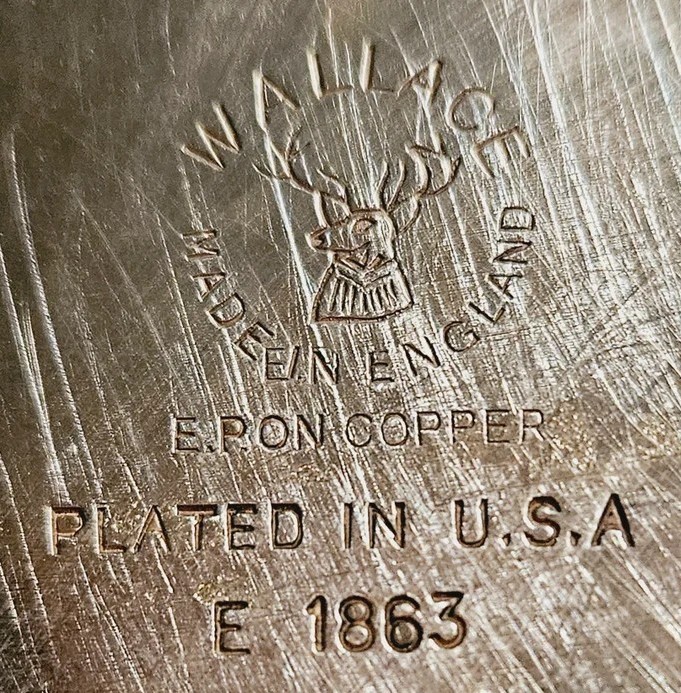
Yes I saw that, but couldn’t that example be of Wallace “stealing” the pattern and making an electroplate version?
Mine has no such Wallace or Sheffield reproduction marks.
Antique Sheffield Lion Hallmark Repousse Silver Plate Floral 8” x 10” | eBay
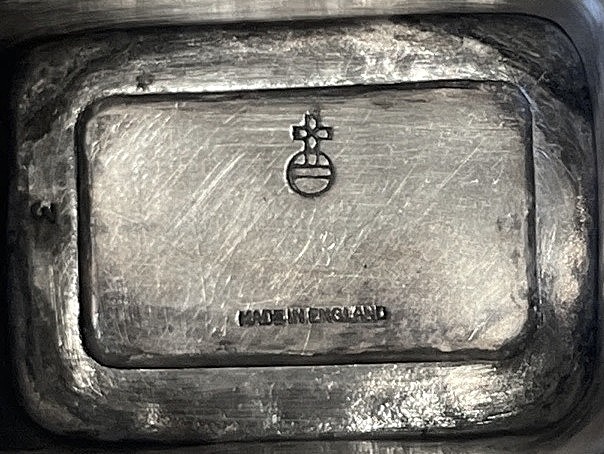
BARKER BROS.SILVER Co. INC. - New York NY and Birmingham, England Activity begun in 1901 by Mary Barker and continued by her son William Barker. Operating as Barker Brothers the firm acquired various other firms as Salaman & Levi and Ellis & Co. and the name became Barker-Ellis Silver Co Ltd.
Same design, different manufacturers…
1 Like
I did think that my piece, if Old Sheffield plate, would have a softer glow to it though, whereas mine does feel like it has the sharpness of electroplate, and perhaps it should have a seam running on the bottom edge of the top, or in the side of the scrolls. Quite crazy that the copper “bleed through” that people suggest to be one of the top indicators of OSP is so succinctly captured in some electroplated pieces… it is also quite interesting that many makers have made this piece, yet overall it still seems to be a relatively uncommon pattern. Who invented it? Theres always something to learn about this subject.
2 Likes
1 Like
I am sure you are right. You have a fine example of electro-plate on a thin layer of copper on a brass or bronze base.
May I draw your attention to a similar question last week on this forum and my answer to that inquiry which may have some relevance?
This opinion, based entirely on photo evidence, carries the usual caveat where one has no ability to look at the original!
CRWW
2 Likes