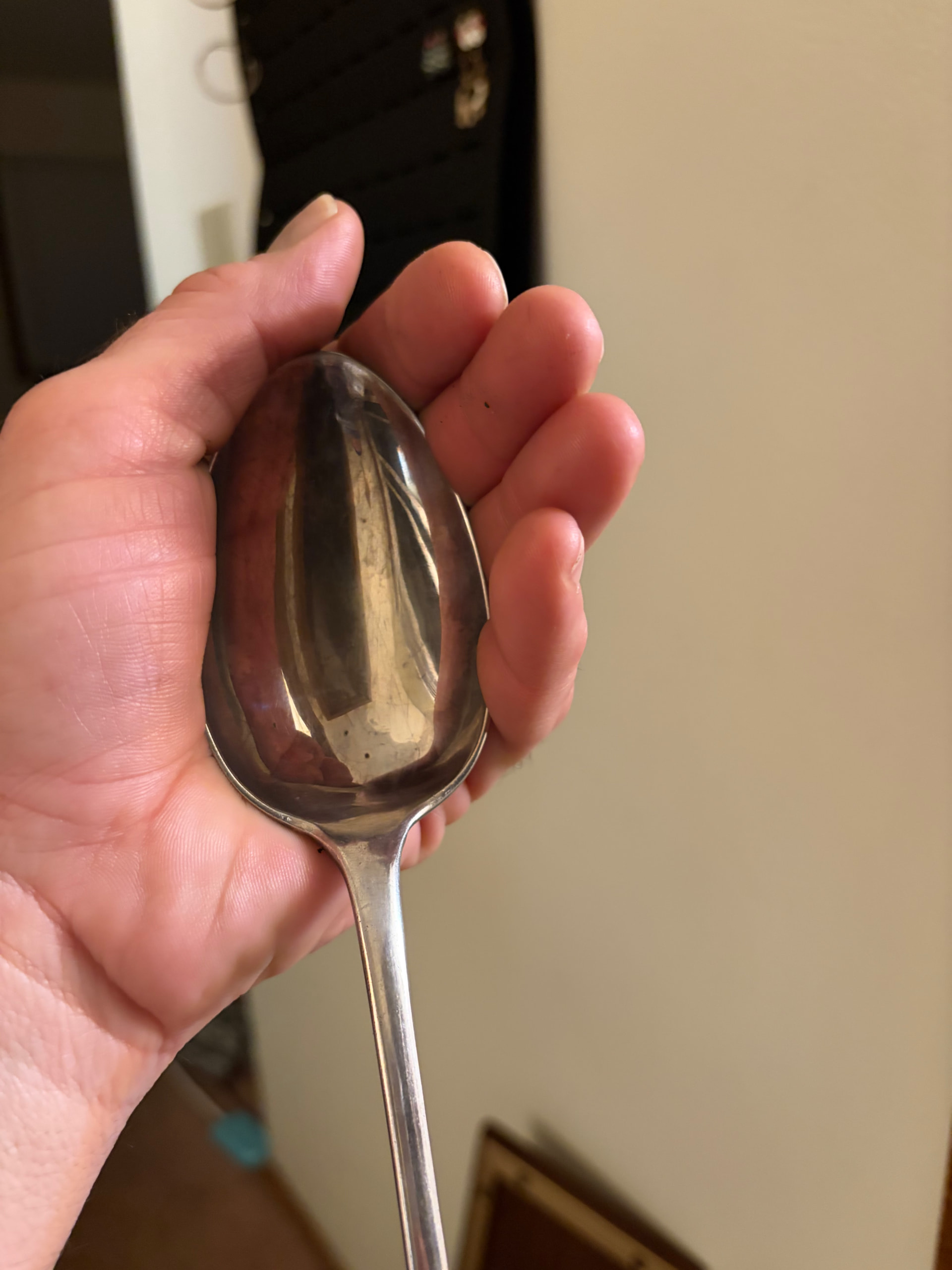
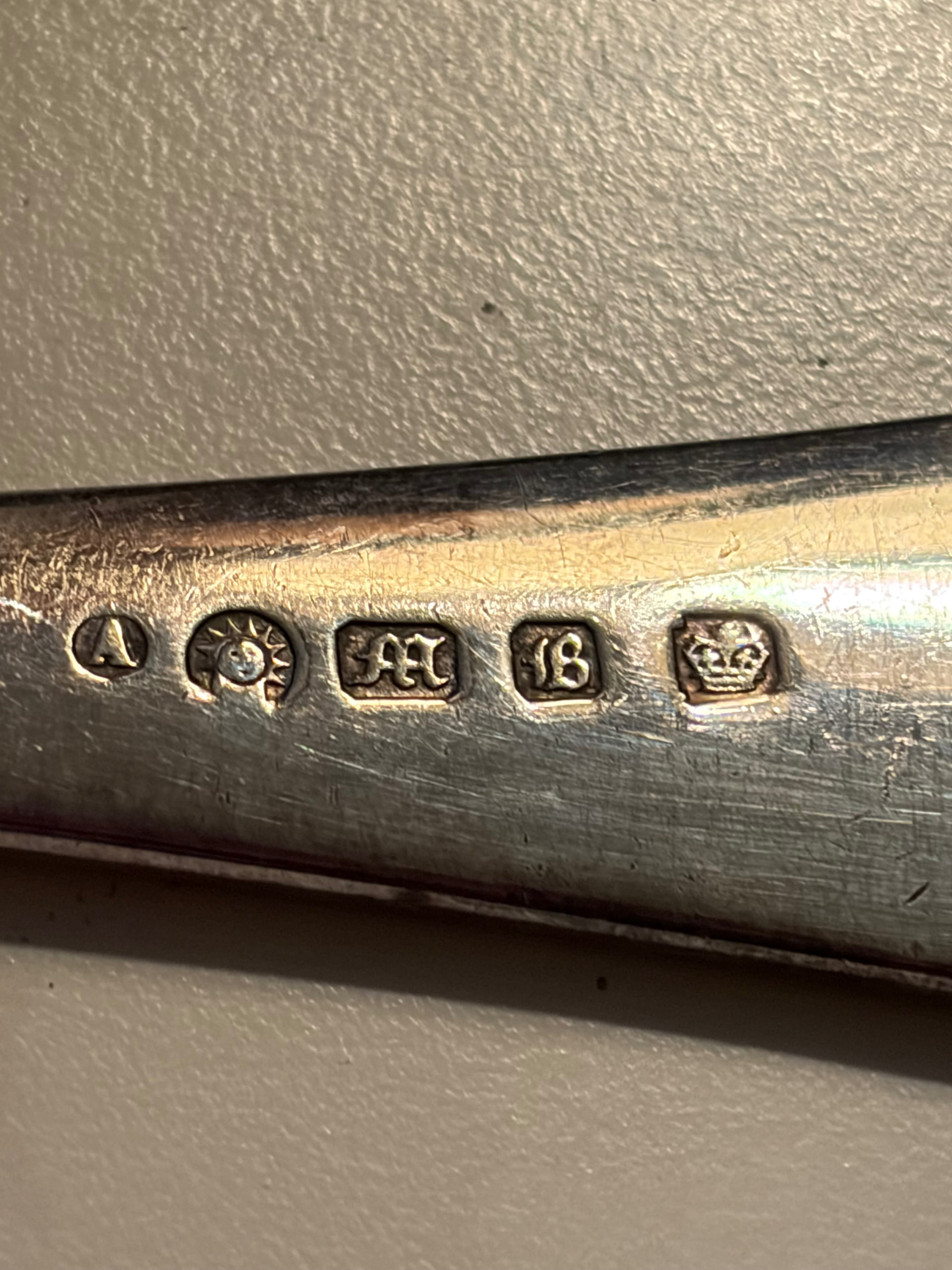
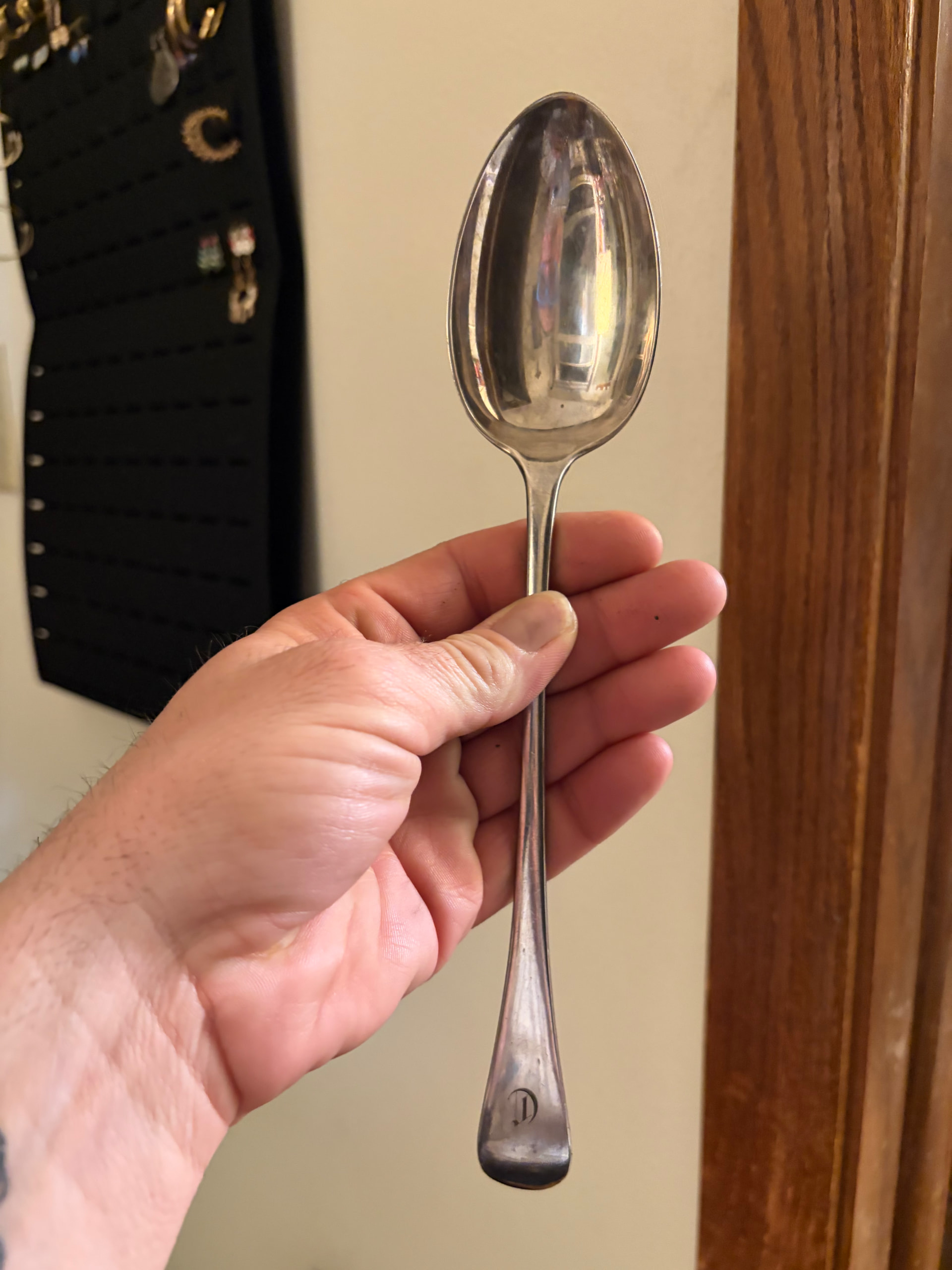
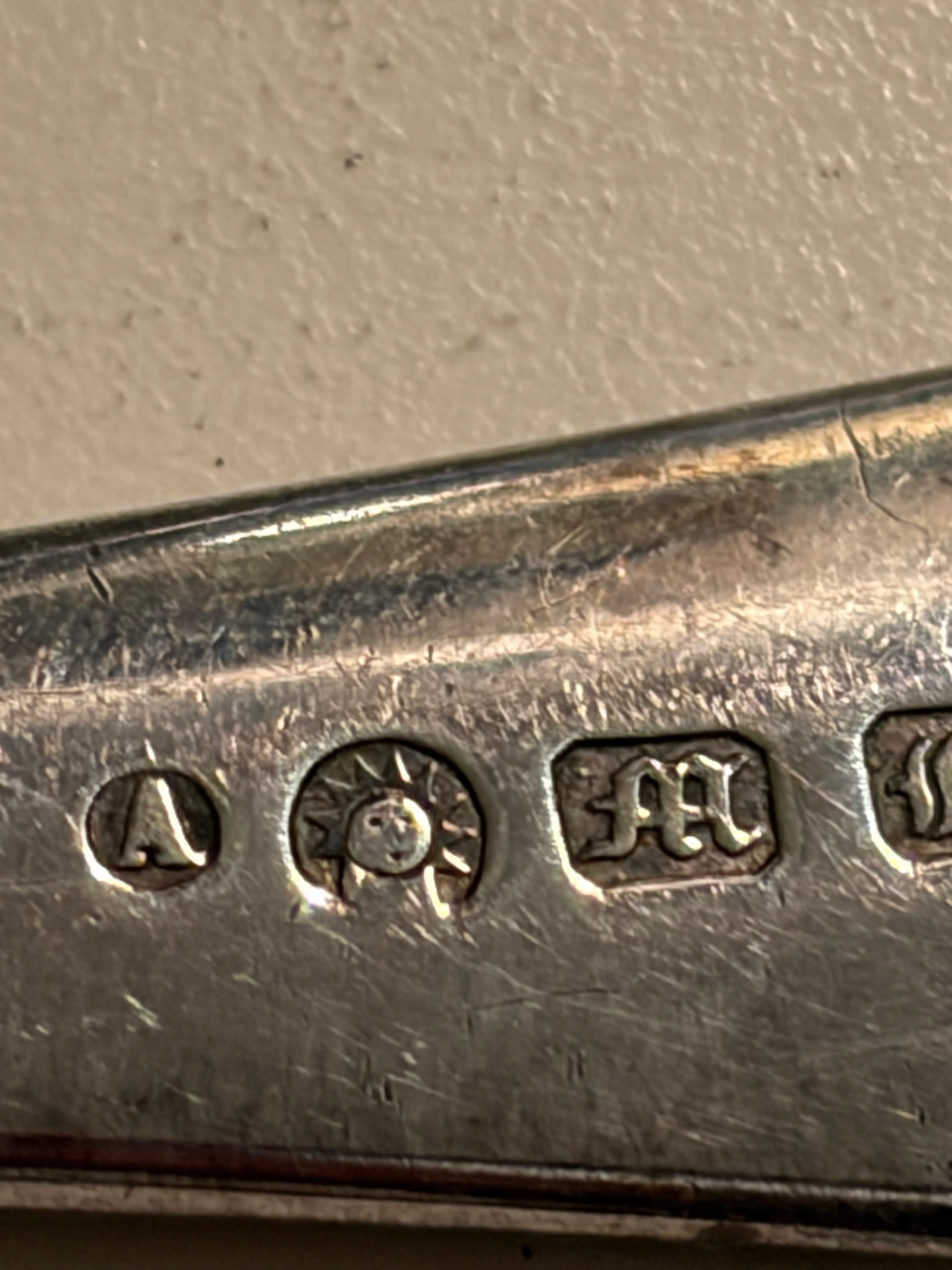
The marks on back of the handle. A, then what appears to be a face with funky hair or a sun with face and has a rectangle under it; then MB and then a crown. Amy help is appreciated. Monogram “C” on handle. Weighs 110g.
2 Likes
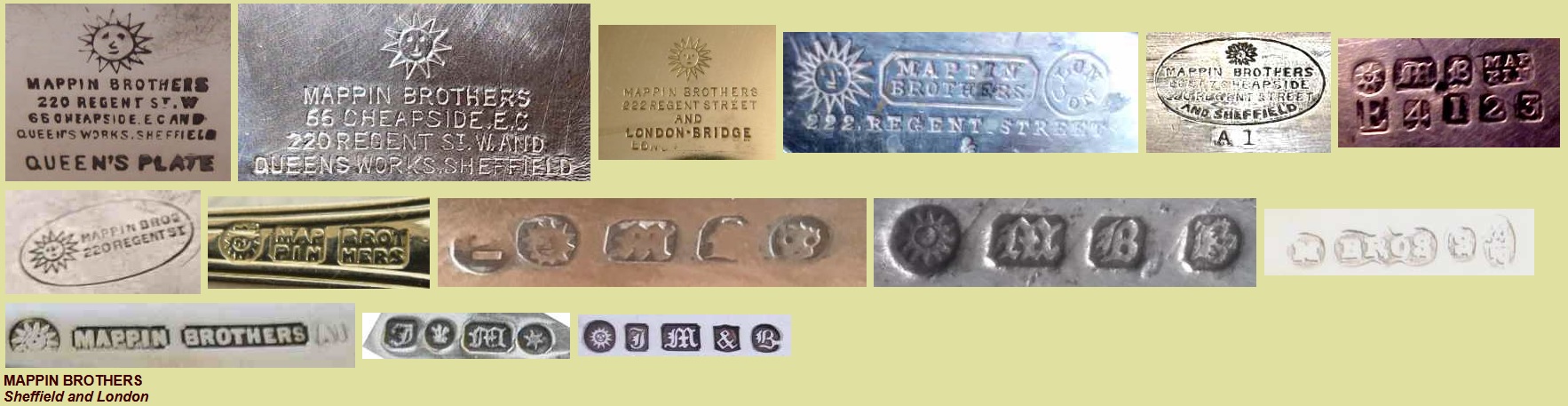
https://www.925-1000.com/forum/viewtopic.php?t=60661
https://www.etsy.com/pl/listing/1584637559/maa-srebrna-yka-chochlowa-mappin
They are close in design, but I don’t believe the exact same. I think Mappin Brothers seems logical. The symbol is off…. I have a new stone for testing arriving Monday so I will be able to at least test it then…. The second hallmark is different than those I see online anywhere. My eyes hurt from looking 
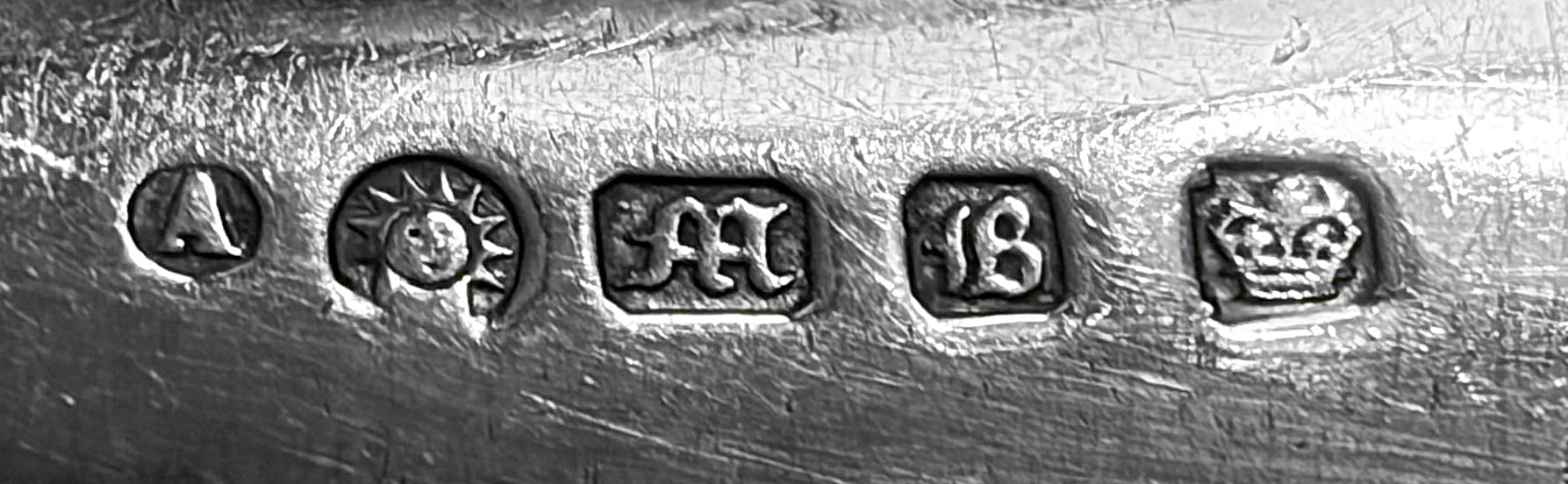
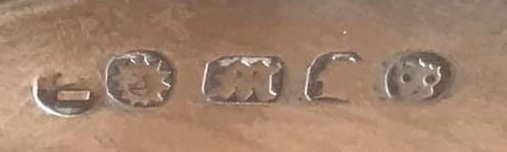
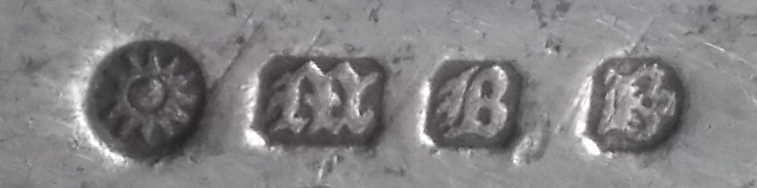
Both utensils are made by Mappin Brothers, a prestigious 19th-century British silversmith based in Sheffield, known for high-quality silverplate, cutlery, and serving items.
Founded in 1774, the firm incorporated in 1845 before eventually merging with Mappin & Webb around 1903–1904. Key marks shown here include “MB”, “Mappin Brothers”, and a sun symbol. The crown became an illegal mark after 1896 and the A in a circle is for quality of plate. The first spoon is old English and the second Queens Pattern.
The Sun symbol was very similar to the double sun symbol of Mathew Boulton of Soho Works in Birmingham who took advice on whether his trade mark had been infringed. No proceedings are recorded so presumably the difference was enough to keep both men out of Chancery.
Matthew Boulton also used the initials MB on his plate.
Boulton, while known as a plater and registered as a goldsmith, was in fact best known for his co-ownership of the first mobile steam engine patent which was developed with James Watt.
Watt didn’t invent steam engines, they already existed and were used to keep water out of sub-sea tin mines in Cornwall. But his creation of the Rocket, the first passenger train with Boulton as investor may well be the basis of the entire British Empire’s expansion on four continents.
CRWW
3 Likes
The use of the gothic lettering for the M and the B indicate your plain Old English item was made between1848 and 1863 according to Mappin and Webb’s own records. The Queens Pattern utensil is later still.
Since both items were made substantially after 1840, when electroplate took over, neither of them is Sheffield Plate – the metal fusion or sandwich patented and then licenced for use by George Elkington and in general use until electro-plate replaced Sheffield plate well before 1848.
Flatware which is not sterling and is Sheffield plated is rare and very sought after – more so than sterling silver especially with a respected maker like Mappin or Boulton.
If you ever find such an item, and if it is bleeding copper base metal, treat it as fragile. Do not use it, do not restore it by electro-plating it. Wrap it in a soft cloth, take it to a knowledgeable silversmith and have him confirm the diagnosis then put it in your safe with that pigeon blood Burmese ruby you’ve inherited from granny. You have treasure.
I was curious as to why Elkington didn’t attempt to monopolize the patent he bought for electroplating from John Wright, a system using potassium cyanide as an electrolyte to coat base metals with silver.
The answer is threefold, first he could make excellent money out of grant of licence including the one to the Mappin Bros that allowed your cutlery to be made, secondly back then patents only lasted about 14 years when they lapsed permanently and thirdly there are competing ways of achieving similar plate which would have allowed competitors to get around his registered entitlement
If, armed with this knowledge you are now going to search through auctions looking for Sheffield plate very often mis-described as simply plated or electro-plated, you will find others are seeking the same elusive prize. Even Georgian copper beer mugs or lidded tankards with faint traces of their former silver armour are of interest.
I once bought box of electroplate and discovered such a item in it and took it triumphantly to a friend of mine an excellent silversmith with a furnace and suggested he might like to disassemble the entire lidded tankard, create sandwich of silver at least on the outside and charge me accordingly. It took Bill 16.5 hours and he charged his time out at rather more than I was then permitted under the rules of court, so probably the most expensive mug I have ever acquired.
The other thing about Sheffield plate is nine times out of ten it is unmarked because retailers either didn’t want punters comparing prices or else nobody was going to get too pernickety at retail about exactly how the item on sale had been produced or by whom.
CRWW
3 Likes
Thanks! It’s overwhelming!!
1 Like
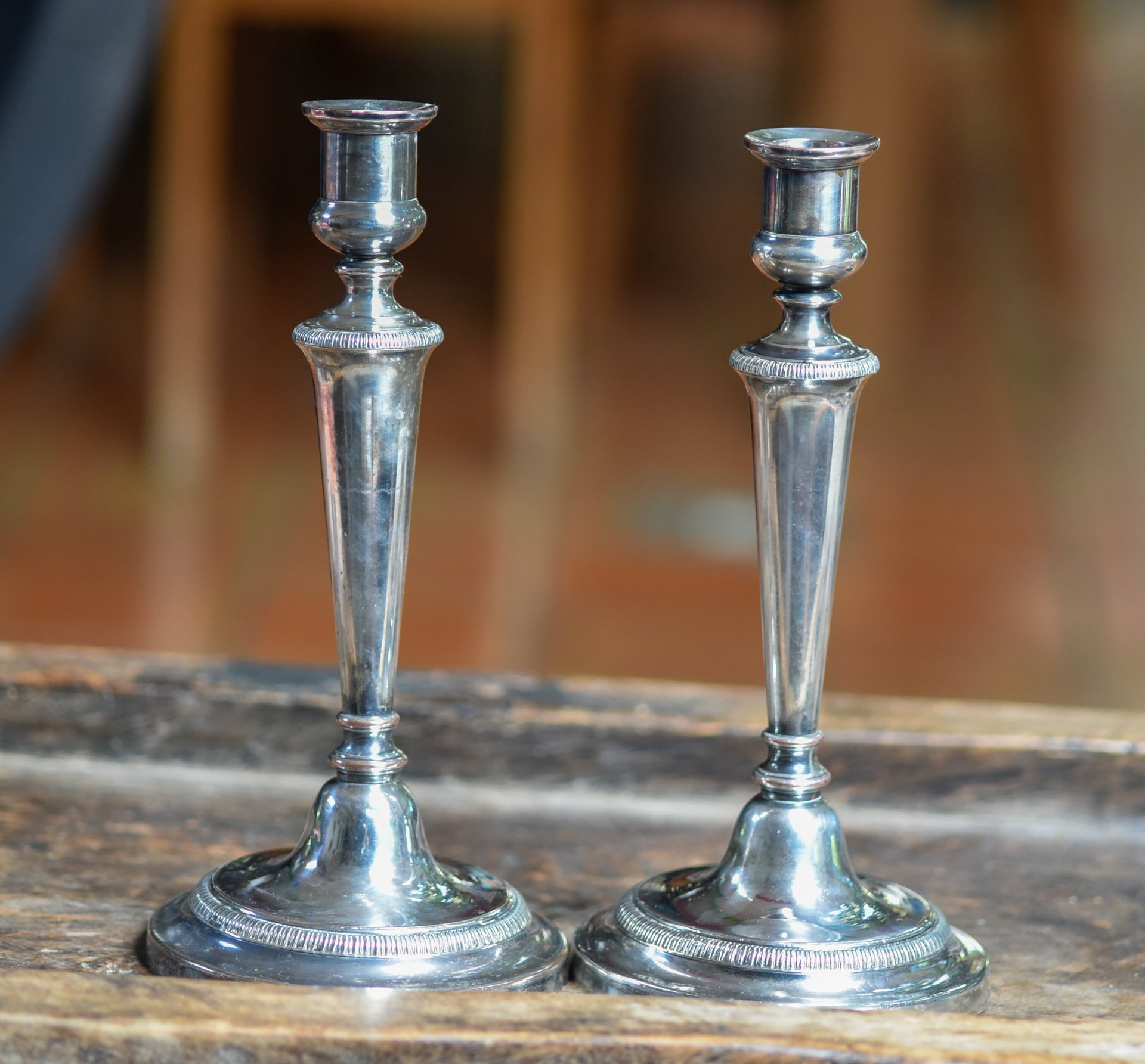
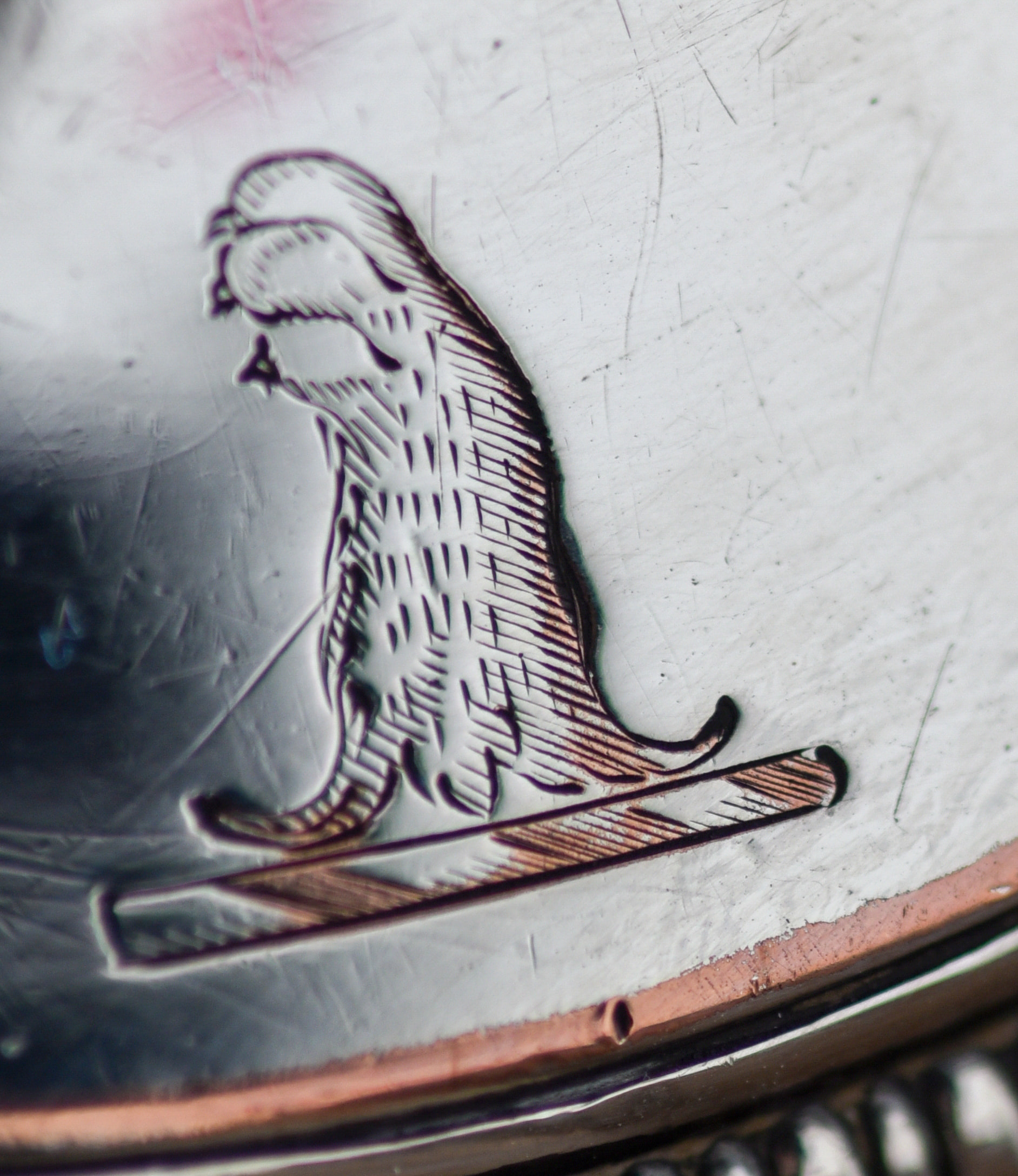
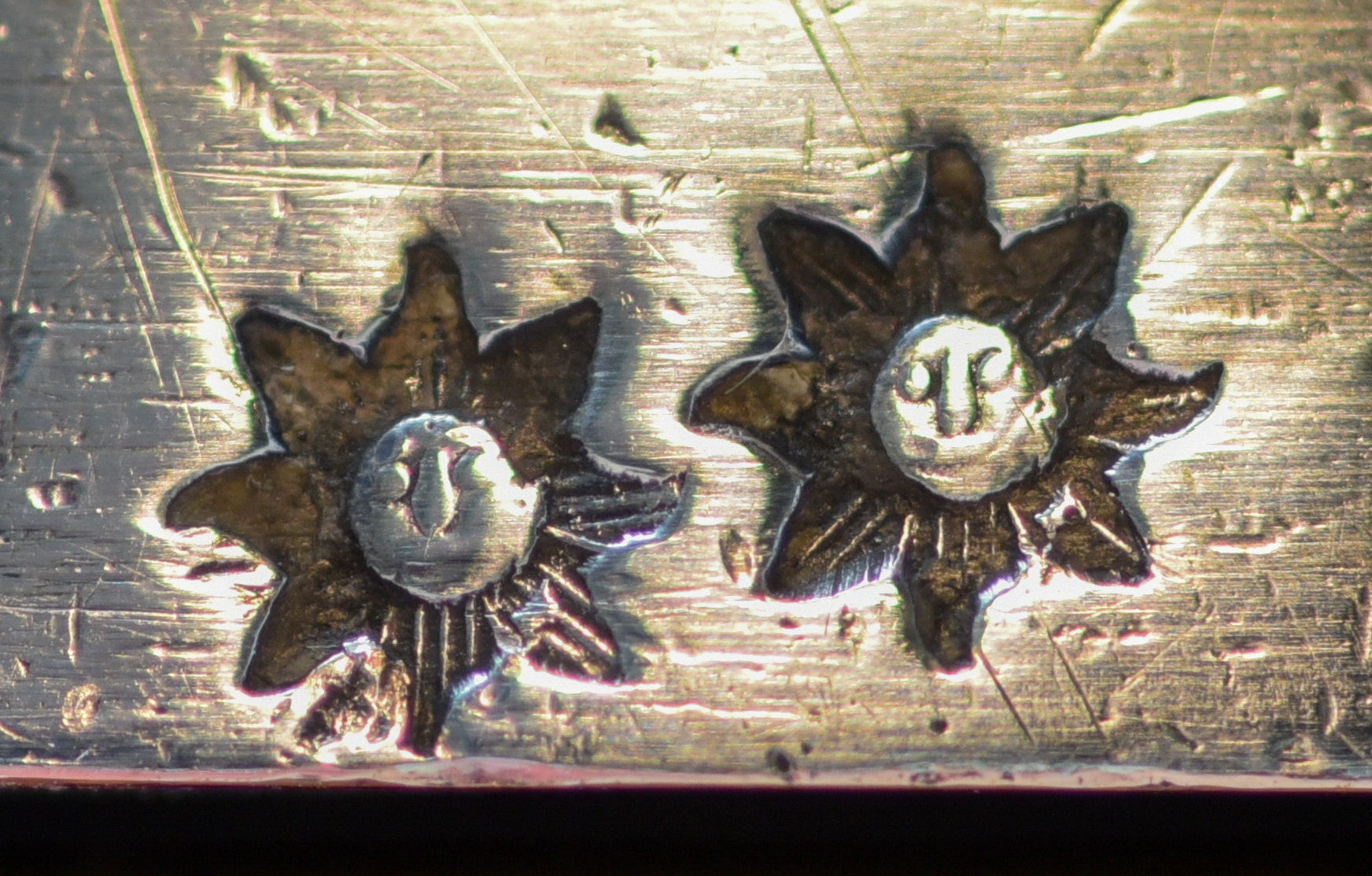
Bonjour. J’ai un chandelier en argent plaqué avec ces deux soleils qui ressemblent à Mappin Brothers ou Mathew Boulton. Pouvez-vous me dire si cela vous semble bon ou si c’est autre chose. Sur le socle du chandelier, il y a également une patte d’ours (ou de lion) que je n’identifie pas. (traduction approximative : Hello ! I have a silver plated chandelier with these two suns that look like Mappin Brothers or Mathew Boulton. Maybe you’ll tell me if that sounds good to you or if it’s something else. On the base of the chandelier, there is also a bear (or lion) paw that I cannot identify.)
2 Likes
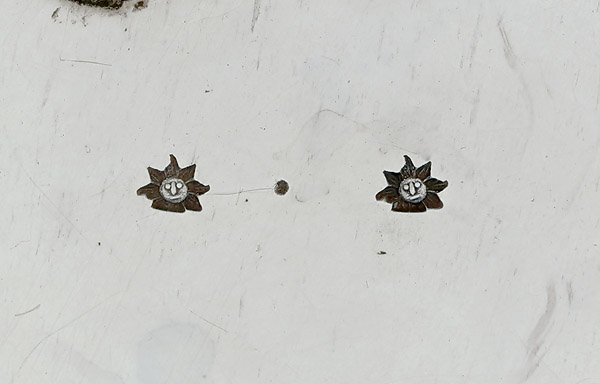
Boulton Twin Suns with faces.
2 Likes
“Bruyer and Bruyeres, a bear’s paw erased cf. 36. 6.” Fairbairn Heraldry
The surname Bruyer was found in Devon “at the time of the Domesday Survey and founded Tor Abbey.”
Ref: A Dictionary of Family Names of the United Kingdom. London: John Russel Smith, 1860. Print.
Another source provides more detail. "Of 32 Praemonstratensian monasteries in England, that of Torre, founded and endowed by William de Brewer in 1196, was by far the richest; it was dedicated to Our Holy Saviour, the Virgin Mary, and the Holy Trinity. "
Ref: Lewis, Samuel, A Topographical Dictionary of England. Institute of Historical Research, 1848, Print.
There are 13 references in Heraldry to paws erased, eight of them reference bears and the remainder are lions. This is a bear paw. There are seven bear paws holding something or holding up something either singularly or together with a second paw. This is the only bear paw erased which stands alone. It is a fairly basic pun on the latinate form of the name Brewer originally from Picardy.
CRWW
2 Likes